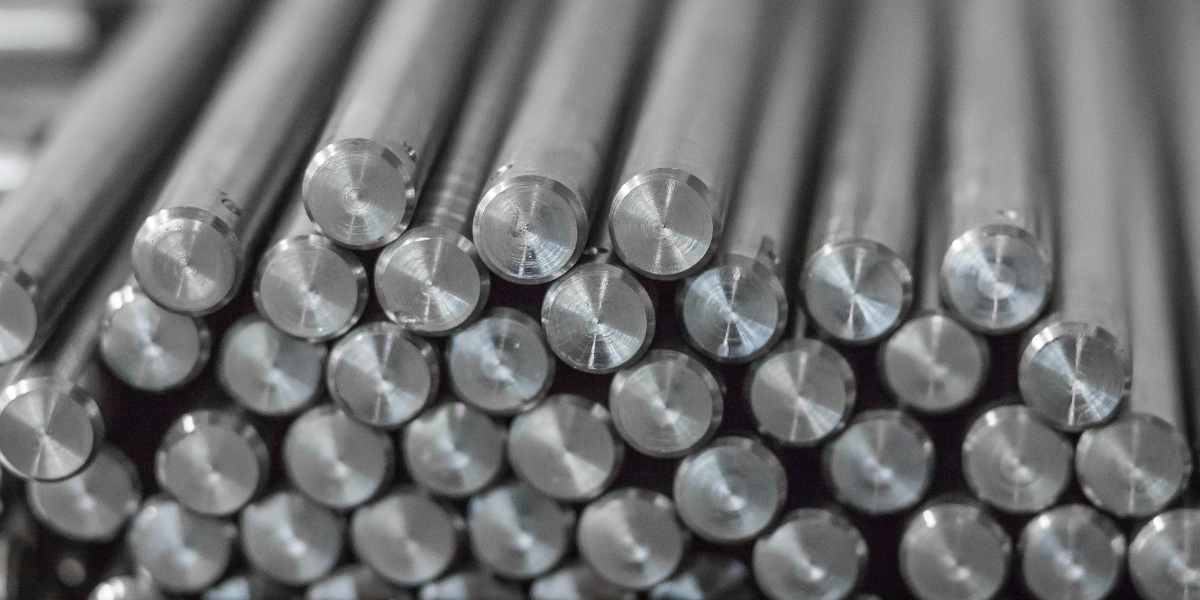

Aluminum and aluminum alloys: Properties & Applications
 by Facturee editorial team
Table of contents
Aluminum is one of the most processed metals in industry. And for good reason. Its low density, high corrosion resistance and excellent machinability make it the material of choice in mechanical engineering, aerospace and electromobility.
However, not all aluminum alloys are the same. Strength, weldability and temperature resistance vary considerably depending on the chemical composition.
This guide provides a clear overview of important alloys. It shows common types, manufacturing processes and alternatives. This will help you make the right choice for your project.
What are aluminum alloys?
Aluminum alloys are materials in which aluminum is combined with other elements as the main component. This results in mechanical, thermal or chemical properties.
The chemical composition largely determines the properties of aluminum in the respective alloy. It determines whether high strength, better weldability or higher corrosion resistance dominate.
Pure aluminum naturally has a Low density of approx. 2.7 g/cm³ and a very good Thermal conductivity. In its pure form, however, it is relatively soft.
Aluminum alloys are only created through targeted alloying. For example with copper, magnesium, silicon or zinc. They offer many properties and are attractive for industrial use.
The classification is based on the international four-digit numbering system for aluminum alloys:
| Series | Main alloying element | Features |
| 1xxx | Pure aluminum (>99%) | Very good corrosion resistance, soft |
| 2xxx | Copper | High strength, aerospace |
| 3xxx | Manganese | Medium strength, easy to form |
| 4xxx | Silicon | Good weldability, die casting |
| 5xxx | Magnesium | High corrosion resistance, shipbuilding |
| 6xxx | Magnesium + silicon | Universal, good machinability, weldable |
| 7xxx | Zinc | Highest strength, aerospace |

What are the advantages of aluminum?
The Properties of aluminum make it one of the most versatile materials in modern manufacturing. The most important advantages at a glance:
- Low weight with high load capacity: Thanks to the low density of 2.7 g/cm³ can be achieved with different alloys components. Despite their low weight, they can withstand high mechanical demands. This is a decisive advantage, especially in lightweight construction.
- High corrosion resistance: Aluminum forms a natural oxide layer on the surface, which protects it from Corrosion protects. Through Anodizing or other methods of Refinement this protection can be increased even further. It is ideal for outdoor applications or contact with Food.
- Excellent heat and conductivity: The high Thermal conductivity of aluminum makes it the first choice for heat sinks, heat exchangers and electronic housings.
- Good machinability: Aluminum alloys, especially the 6xxx series, are excellent for milling, turning and drilling. This allows the economical production of complex geometries - a key advantage of CNC machining.
- Recyclability: Aluminum can be recycled almost indefinitely without any loss of quality. This makes it a sustainable material with a good CO₂ profile over its entire life cycle.
What are the disadvantages of aluminum?
Despite its many strengths, aluminum also has limitations that should be taken into account when selecting a material. Here is an overview:
- Lower strength compared to steel: Even alloys with high strength such as 7075 do not achieve the tensile strength of high-alloy steel. Where extreme loads prevail, even High-quality aluminumalloys reach their limits.
- Limited suitability at higher temperatures: The mechanical properties of aluminum deteriorate with higher temperatures clearly. From approx. 150-200 °C, many alloys already lose noticeable Strength and hardness. Materials such as Inconel or titanium are more suitable for high-temperature applications.
- Welding requires specialist knowledge: Welding of aluminum alloys is technically more demanding than with steel. Some alloys are only suitable for Weldable and require special procedures and Years of experience in the processing.
- Soft surface: Without surface treatment, aluminum is relatively sensitive to scratches. This can be remedied by Coating of aluminum, for example by hard anodizing.
Aluminum in production: Processes at a glance
Aluminium alloys can be processed using a variety of modern manufacturing processes. This is what makes them so universally applicable - whether for individual parts or in series production.
CNC milling and turning
The Aluminum processing using CNC is one of the most common methods. The Good machinability of aluminum alloys enables high cutting speeds and therefore short cycle times. Alloys of the 6xxx series (e.g. EN AW-6082) and 7075 are particularly suitable.
Sheet metal processing
Aluminum parts are often produced by laser cutting, bending and deep drawing. Aluminum sheets from the 5xxx series are particularly popular due to their good formability.
Die Casting
Aluminum die casting often uses 4xxx alloys such as AlSi9Cu3.
It is the preferred process for complex castings in large quantities.
Typical applications include motor housings, gearbox housings and structural components.
3D printing
AlSi10Mg is primarily used in the additive sector. 3D printing with aluminum allows complex shapes. These would be difficult or impossible to achieve with machining. For example, lightweight structures with grid infill.
Coating and finishing
The Coating of aluminum includes procedures such as Anodizing (anodizing), hard anodizing, powder coating and chromating. They improve corrosion protection, appearance and Strength and hardness of the surface.
What are the typical applications of aluminum alloys?
Thanks to their wide range properties are Aluminum and aluminum alloys represented in almost every industry:
- Aerospace: In the aerospace industry, 2xxx and 7xxx alloys are mainly used. They offer high strength combined with low weight. Typical components are structural frames, ribs, fairings and landing gear components.
- Automotive and e-mobility: Body parts, battery housings and structural components in electric vehicles are increasingly made of high-quality aluminumalloys to optimize weight and thus range.
- Mechanical engineering: Housings, brackets, guide rails and hydraulic components are widely used in mechanical engineering. Aluminum parts are manufactured using CNC machining. The quality remains consistently high.
- Shipbuilding: 5xxx alloys with high corrosion resistance against salt water are in the Shipbuilding for superstructures, decks and hulls.
- Food and pharmaceutical industry: Aluminum is physiologically harmless and corrosion-resistant. It is very suitable for anodizing. It is ideal for contact with food and pharmaceutical products.
- Electronics: Heat sinks, housings and thermal management components benefit from the high Thermal conductivity of the material.
Aluminum alloys: Overview of common grades
| Alloy | Series | Tensile strength | Special features | Typical application |
| EN AW-6082 | 6xxx | ~310 MPa | Very good machinability, weldable | Mechanical engineering, structural parts |
| EN AW-7075 | 7xxx | ~570 MPa | High strength, difficult to weld | Aerospace, Sport |
| EN AW-5083 | 5xxx | ~290 MPa | High corrosion resistance | Shipbuilding, marine applications |
| EN AW-2024 | 2xxx | ~470 MPa | High fatigue strength | Aerospace, vehicle construction |
| AlSi10Mg | 4xxx | ~330 MPa | Ideal for die casting and 3D printing | Castings, additive manufacturing |
| EN AW-1050 | 1xxx | ~95 MPa | Soft, very good corrosion resistance | Food, chemistry |
What alternatives are there to aluminum alloys?
The following overview shows the most important alternatives with consistently high quality. Depending on the requirements profile, they can replace aluminum alloys. The table provides a compact comparison of the options.
| Material | Density | Strengths | Weaknesses | Typical use |
| Aluminum alloys | 2.7 g/cm³ | Lightweight, easy to machine, corrosion-resistant | Limited high temperature resistance | Mechanical engineering, automotive, electronics |
| Titanium | 4.5 g/cm³ | Very high strength, biocompatible | Expensive, difficult to machine | Medical technology, aerospace |
| Stainless steel | 7.9 g/cm³ | High strength, robust | Heavy, complex machining | Components subject to high static loads |
| Inconel/Hastelloy | ~8.4 g/cm³ | Extremely temperature-resistant | Very expensive, difficult to machine | High temperature, chemistry |
| Magnesium | 1.7 g/cm³ | Lighter than aluminum | Expensive, limited weldability | Special lightweight construction |
| CFRP/GRP | 1.5-1.8 g/cm³ | Extremely light with high strength | Complex and expensive to manufacture | Aerospace, high-performance sports |
Your aluminum supplier: FACTUREE
Are you looking for a reliable partner for drawing parts made of high-quality aluminum and aluminum alloys? FACTUREE offers you modern material quality and certified online production.
Benefit from:
- Approved manufacturing partners
- Fast delivery times
- Certified material quality - including material certificates
- Precise implementation according to drawing.