
Our offer
Cast parts: Online, fast & secure from a single source
FACTUREE is your modern contract manufacturer of cast parts. Benefit from the numerous advantages over conventional production.
You can use our online tool to request plastic or metal castings quickly and easily. You will usually receive your quote on the same day. Having cast parts manufactured has never been so easy!
Extensive network
Our global network of over 2,000 certified manufacturing partners guarantees short delivery times (including express delivery). We offer over 300 materials for your castings, from prototypes to large series.
One contact person
A personal and dedicated contact person is always at your side. You can rely on cast parts of consistent, reliable quality thanks to ISO 9001-certified quality management and a low complaint rate.
From a single source
FACTUREE offers you the modern production of cast parts - all from a single source, digitally and efficiently. Ordering has never been so easy: upload your drawing and get individual advice. Only then do you start production.
Manufacturing process
Casting process: All processes for the production of your castings at FACTUREE
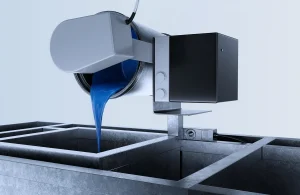
Casting processes are a key service offered by FACTUREE for the production of complex components. Liquid material (such as metal or plastic) is poured into a mold. There it hardens and takes on its final shape.
Our production controls all relevant factors: Material (e.g. zinc, aluminum or magnesium), casting temperature, tool design and the necessary post-processing. This results in functional and economical parts - from individual items to series production.
FACTUREE relies on various casting processes for a comprehensive service - depending on geometry, material and specific requirements:
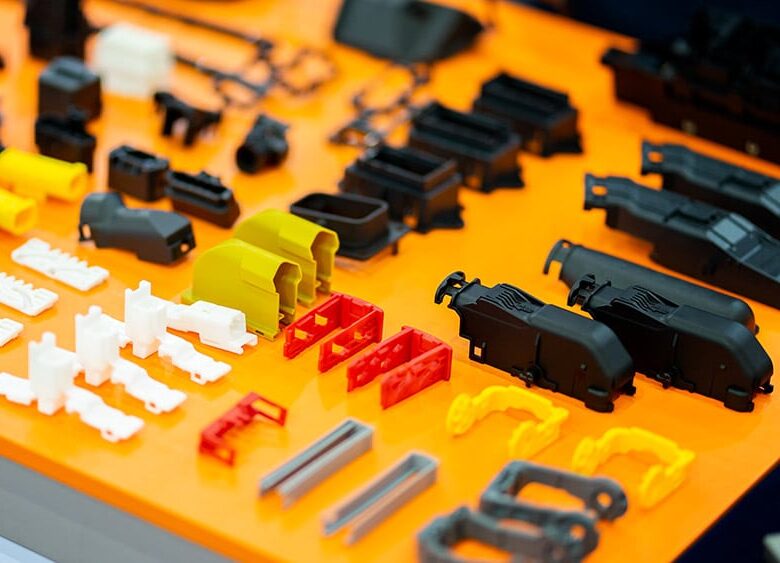
In injection molding, liquid raw material is injected into the cavity of a closed mold. The material fills the mold precisely and then hardens through cooling or a chemical reaction. It then takes on the exact contour of the mold. The most commonly used materials are polyurethane (PUR) or other plastics.
This process enables the realization of very complex shapes and sophisticated designs. Other methods are often difficult to implement. It is also often attractive for the cost-effective production of smaller quantities. This is because the tool costs are moderate compared to other methods.
Our manufacturing partners use injection molding to produce detailed prototypes and small batches. This is important for products where a high degree of design freedom and precise shaping need to be realized quickly. In combination with modern materials, cast parts with specific mechanical properties can be produced efficiently. Read more about injection molding at FACTUREE here.
In die casting, liquid metal is pressed into a reusable mold under high pressure. This mold is called a die. The material solidifies within fractions of a second and completely fills even the most intricate contours.
This process is characterized by extremely short casting cycles and very high dimensional accuracy. It is the most economical process for the production of complex and thin-walled parts in high to very high quantities.
Our manufacturing partners use high-pressure die casting for efficient mass production. This is important for the cost-effective production of components with complex geometries and high repeat accuracy. In combination with extensive automation, maximum productivity and low unit costs can be achieved. Read Find out more about die casting at FACTUREE here.
In vacuum casting, the casting mold is positioned in a vacuum chamber. Before the molten material is poured in, the system removes the gases and air. This is done under a pressure of 100 bar or less. Only then does the material flow into the mold without bubbles.
This process aims to consistently eliminate bubbles, air pockets and porosity. It is therefore ideal for manufacturing thin-walled products or components. This is because these require an extremely high material density and flawless surfaces.
Our partners use vacuum casting for cast parts with high quality requirements. This is important for pore-free structures and good material integrity. This is particularly true for complex cross-sections. The process ensures high repeat accuracy for components where air inclusions would lead to immediate rejects. Read more about vacuum casting at FACTUREE here.
In gravity casting, also known as permanent mold casting, the liquid metal is poured into a reusable mold using gravity. This mold is called a permanent mold. The material fills the mold cavity slowly and in a controlled manner under its own weight. This results in a dense structure.
This process is ideal for medium quantities. It enables smooth surfaces to be achieved and complex internal geometries to be reproduced. It offers greater dimensional accuracy and better mechanical properties than sand casting.
Our manufacturing partners use gravity die casting for flexible and high-quality production. This is important for components that require a good surface finish and precise internal contours. The high tooling costs of die casting are eliminated. It represents an excellent compromise between casting quality and series flexibility.
Materials
High-quality materials for all casting processes
FACTUREE offers many high-quality materials for cast parts. These include common casting metals such as aluminum alloys, zinc and magnesium. Cast steel, cast stainless steel and special metals such as copper alloys are also available.
However, you can also request thermoplastics for injection molding (a form of casting) from us. Our experts will be happy to advise you on which material is suitable for your casting process.
Thanks to our global production network, we ensure the continuous availability of all materials - from prototype to series production. In this way, we guarantee consistent quality and a smooth process for functional, precise and visually perfect cast parts.
Frequently requested materials
Cast iron materials
Cast iron materials are robust, economical and ideal for heavy, stable components. They offer excellent strength and vibration damping (especially gray cast iron).
The choice is important for durable castings. You can choose between brittle gray cast iron and tough ductile cast iron or cast steel. Gray cast iron is damping, while ductile cast iron and cast steel are resilient.
Cast iron parts almost always have to be post-treated for corrosion protection (painting, phosphating). However, they are ideal for mechanical engineering, engine blocks and structural parts.
Frequently requested:
- EN-GJL-250 | gray cast iron (old GG25)
- EN-GJS-400-15 | ductile cast iron (old GGG40)
- G20Mn5 | 1.6220 | Cast steel
Mineral and ceramic materials
These inorganic, non-metallic materials cover a broad spectrum from prototyping to high-performance applications. They are typically electrically insulating, dimensionally stable and often extremely heat-resistant (ceramics).
Castings made of mineral and ceramic materials are good for mold making, the construction sector and technical high-temperature applications.
Frequently requested:
- Aluminum oxide
- Technical ceramics Zirconium dioxide
- High-performance ceramic stucco plaster
- Model & mold making Portland cement
- Concrete
Non-ferrous metals
Non-ferrous metals (NF metals) are the basis for modern lightweight construction and precision casting. They are corrosion-resistant (aluminum), can be cast with extreme precision (zinc) and are lightweight. They allow very thin wall thicknesses and complex shapes directly from the mold.
This is particularly true for die casting. They often have an excellent surface quality for finishing. This includes anodizing for aluminium and chrome plating for zinc. Cast parts made from non-ferrous metals are ideal for electronics, automotive and design components.
Frequently requested:
- EN AC-46000 | Aluminum alloy
- ZAMAK 5 | Zinc alloy
- CuSn10 | Bronze (copper alloy)
Plastics
In injection molding, thermoplastics offer unrivalled design freedom and cost-effectiveness in series production. They are lightweight, electrically insulating and can be produced directly in the final color.
The mold design (draft angles) and the choice of material (e.g. fillers) are crucial for precision-fit injection-molded parts. The variety (from standard ABS to high-performance PEEK) is huge.
Plastic castings are ideal for housings, functional parts and consumer goods.
Frequently requested:
- ABS | acrylonitrile butadiene styrene
- PA 6.6 | Polyamide PC |
- Polycarbonate POM | Polyoxymethylene
Surface treatments
Your castings with surface treatments
The right surface treatment is crucial for corrosion protection, a longer service life and a flawless appearance. Whether powder coating, painting, KTL coating or galvanic chrome plating - we will find the optimum solution for your cast parts.
FACTUREE offers the entire process from casting to surface treatment from a single source. This saves you time and work steps and you receive ready-to-install cast parts that are perfectly tailored to your application.
Please note that different finishes and surface treatments are possible depending on the casting process. Here you will find a selection of frequently requested treatments.
Frequently requested surface treatments
Mechanical finishes
- Blasting
- Grinding
- Polishing
- Engraving
Chemical finishes
- Degreasing
- Pickling
- Etching
- Chromating
- Phosphate conversion coating
- Electroless nickel plating
Electroplating
- Copper plating
- Nickel plating
- Chrome plating (mainly for zinc)
- Anodizing (mainly for aluminum)
Organic Coatings
- Varnishing
- Powder coating
- Cataphoretic dip coating (KTL)
Contact person
Your experts for cast parts at FACTUREE
With us, you not only receive digitally procured cast parts, but also comprehensive support from our experienced experts. Our platform combines modern online processes with personal advice from qualified contacts.
We use our technical knowledge of modern technologies. We also have a good understanding of materials. This enables us to advise you well. With in-depth knowledge of wall thicknesses, forming angles and casting processes, together we will find the best solution for your project.
Your personal contact person will accompany you throughout the entire process. They will support you from the initial consultation through to delivery of the castings. In this way, we ensure that our service is provided at eye level. Get to know FACTUREE here.
Billy Schulz
Head of Operations
schulz@facturee.de
Tel: +49(0) 30 629 3939-10
Antonio Scala
Team Lead IT/ES/EN
antonio.scala@facturee.de
Tel: +49(0) 30 629 3939-30
Walid Tlili
Team Lead FR/EN
walid.tlili@facturee.de
Phone: +49(0) 30 629 3939-19
Figures
Facts instead of promises
10k
Successful projects
per year
30k
Customers trust
in FACTUREE
9-12
Working days until
delivery time
37%
Savings on
average
Major projects
From prototype to series production: scalable production of cast parts
FACTUREE is your dedicated partner for cast parts, supporting you throughout the entire product life cycle.
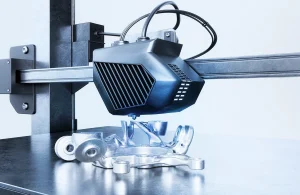
We start with the development of exact prototypes. These prototypes help us to check the later cast part. We use processes designed for rapid prototyping, such as CNC machining or 3D printing. This enables rapid validation of design and function even before expensive casting molds (tools) are created.
We offer flexible small series for market entry. These can be efficiently implemented using rapid tooling or optimized master moulds. They are ideal for tests, pre-series or pilot projects.
For larger quantities, we rely on efficient series production. We use digital processes and modern casting technology. With high-performance die-casting machines and durable series molds, we bring your cast parts precisely into the desired shape. This enables us to realize even complex geometries with high quality, cost-effectiveness and punctual delivery.
Framework agreements are available for long-term planning. These guarantee you call-off quantities, stable prices and maximum delivery reliability, even when demand fluctuates.
Our prototyping service for future castings is designed for speed and validation. Our digital procurement platform gives you direct access to available capacity in our manufacturing network.
This network is Europe-wide and offers processes that simulate casting. This provides you with functional, dimensionally accurate prototypes, e.g. CNC-milled from solid material or 3D-printed.
These prototypes are ideal for quickly checking the form, function, accuracy of fit and aspects of later castability (e.g. wall thicknesses). For you, this means short delivery times for the first sample and reliable planning for the series casting molds.
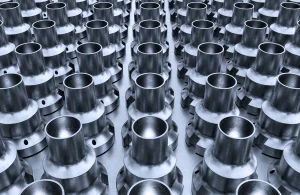
Our cast parts remain cost-effective even in large quantities. This is made possible by the targeted use of modern casting technology (such as die casting or injection molding) and digital production planning.
Thanks to optimized casting processes (e.g. control of cycle times) and durable series moulds (die casting moulds), we manufacture efficiently and with repeat accuracy on high-performance die casting machines. High quality is a guarantee.
Our procurement platform selects the ideal manufacturing partner from our network for your requirements. In this way, we not only guarantee precise results, but also a unit price that is convincing in series production.
With a framework agreement, you can be sure of a reliable supply of cast parts throughout the entire product life cycle. We guarantee price stability and availability.
You can flexibly call up different variants. The call-offs and the use of your molds (tools) are planned centrally.
At the same time, you benefit from a optimized material efficiency. Intelligent batch size planning in production also leads to a reduction in unit costs. This is ideal for series projects where both reliability in planning and flexibility are essential.
Reasons for FACTUREE
Numerous advantages over conventional production of cast parts
Fast
- Consistently short delivery times
- Same day offer in most cases
- Simple online inquiry Europe-wide
- Express shipping
Versatile
- Broadest manufacturing range in the market
- Prototyping, small and large series
- 300+ materials available at all times
- From a single source
Reliable
- Unlimited production capacity
- Low complaint rate
- ISO 9001 certified quality management Download
- Personal customer support
REFERENCES
From industry to cutting-edge international research - more than 30,000 satisfied customers
Short delivery time for
Complex production
Despite the complex manufacturing process involving high quantities and tight delivery deadlines, FACTUREE was actually able to deliver the components before the agreed delivery date. The speed at which orders were processed and the personal customer service also impressed us. Costs 15% lower
than with other providers
The quotation from FACTUREE was quick, as was the delivery of the components. The incoming inspection was flawless. The cost of the components was 15% lower compared to other suppliers in Europe. New degrees of freedom through
Stable procurement processes
FACTUREE takes on the task of manufacturing complex components for special applications for us, freeing up valuable resources needed for other activities. Its reliable procurement process allows us to remain operational at all times.
Easy to operate
Procurement interface
We highly regard FACTUREE as a reliable supplier of production parts with good delivery times and an easy-to-use procurement interface. Especially in times of coronavirus, this procurement approach offers the necessary safety.
Wide range of services and
good pricing
FACTUREE provided their quote very quickly, within one to two days. We were impressed by their broad range of services as well as their pricing structures and short delivery times. FACTUREE has met 100% of its delivery dates up to now.
FAQ
Frequently asked questions about casting processes
How does casting (as a form of production) work?
Casting is a Primary molding process. The basic process is always the same:
- A material (e.g. metal, plastic) is liquefied (usually by melting).
- This melt is poured into a cavity, the so-called Shape (also known as a die or mold), cast or injected.
- The material cools in the mold and solidified, It takes on the exact inner contour (geometry) of the mold.
- The finished component (cast part) is removed from the mold (demolded).
What is the difference between casting and forging?
The difference is fundamental:
- Giessen (casting): Works with liquid Material. The metal is melted and fills a mold. The result has a cast structure, is often more brittle, but can take on extremely complex shapes.
- Forging: Works with solid, but heated material. A solid block of metal (blank) is forced into shape by hammering or pressing.
This compacts the material structure (fiber flow). Forged parts are therefore extremely tough, strong and durable (e.g. wrenches, crankshafts), but geometrically more limited than cast parts.
What is the difference between die casting and investment casting?
Both are casting processes, but with fundamentally different approaches and forms:
- Die casting (Die Casting):
- Shape: Uses an expensive, durable Steel permanent mold (mold), which is reused thousands of times.
- ProcessThe molten metal usually consists of non-ferrous metals. These include aluminum, zinc or magnesium.
This melt is shot into the mold at high pressure. The pressure can be up to 1,000 bar. The speed is also high.
- Result: Very fast (short cycle times), extremely precise, smooth surfaces. Ideal for High quantities (series production).
- Investment casting (investment casting / lost wax process):
- Shape: Uses a „lost form“ made of ceramic. This is created anew for each individual part and destroyed at the end.
- Process: A model of the part is created from wax. This wax model is dipped in ceramic slip until a thick ceramic shell is formed. The shell is heated and the wax melts out (hence the „lost wax process“). The empty ceramic mold is then cast with metal (all metals are possible, including steel and titanium).
Result: Slow process, but unsurpassed in the geometric freedom (most complex parts, undercuts) and variety of materials.
What is casting with a lost mold?
This is a watering principle in which the mold is used only once. It must be destroyed in order to remove the casting.
The advantage is that complex geometries with undercuts can be cast. As a rule, these would not be obtained from a rigid permanent mold (as with die casting).
The two best-known procedures are
- Investment casting (The ceramic bowl is broken).
- Sand casting (The mold made of pressed sand is broken after casting).
What tolerances are possible for cast parts?
The tolerances are extremely dependent on the process. As a rule of thumb (very rough):
- Sand casting (most inaccurate): Often +/- 1 mm per 100 mm or more.
- Investment casting (very precise): Approx. +/- 0.1 mm to +/- 0.4 mm.
- Die casting (most accurate): Very precise, often +/- 0.02 mm to +/- 0.1 mm (especially zinc die casting).
Important: Critical dimensions (e.g. bearing fits, sealing surfaces) are almost always subsequently mechanically processed (milled, turned) in order to achieve CNC precision. Tolerances are also maintained for mold construction/toolmaking to ensure optimum series production.
Which materials are suitable for my castings?
This depends on the casting process:
- Die casting: Almost exclusively non-ferrous metals (NF metals) with a lower melting point:
- Aluminum alloys (AlSi, AlMg)
- Zinc alloys (Zamak)
- Magnesium alloys
- Investment casting & sand casting: Almost all metals can be cast:
- Ferrous metals (cast steel, cast stainless steel, cast iron)
- Copper alloys (bronze, brass)
- Aluminum alloys
- Titanium and nickel-based superalloys (investment casting only)
- (injection molding as a related process):
- Thermoplastics (ABS, PA, PC, POM, PEEK etc.)
What are the disadvantages of casting processes?
- High tooling costs: The steel molds (tools) are extremely expensive, especially for die casting and injection molding. The process is often only worthwhile from thousands of pieces.
- Casting defects: Defects can occur in the material structure (blowholes, porosity, inclusions). These are small cavities or impurities that can reduce the strength.
- Lower strength: Cast parts are often not as strong and robust as parts that are forged or milled from a solid block.
- Limited prototypes: (See next question).
Which casting process for prototypes?
This is a critical point. For Series die casting (aluminum, zinc) are available none economical casting prototyping, as the steel mold is too expensive.
Prototypes for later cast parts are therefore usually simulated:
- CNC milling: The part is milled from a solid block (e.g. aluminum). This is ideal for testing the function with the final material.
- 3D printing (metal or plastic): Ideal for quickly checking the shape, fit and ergonomics (fit check).
Real cast prototypes (if the casting structure needs to be tested):
- Investment casting or Sand casting can be used for prototypes, as mold production (wax model or sand mold) is cheaper.
Which casting process for complex geometries?
Clearly: Investment casting (lost wax process).
The wax master model can be molded into very complex shapes. It can even be 3D-printed. The ceramic mold is built around the model. The mold is later destroyed. There are therefore almost no geometric limits. Internal channels, undercuts and filigree structures are possible. Ask the team directly.
All of the casting processes mentioned above can handle complexity. However, the choice depends heavily on the material (plastic vs. metal), the required quantity and the specific requirements (e.g. how thin-walled, whether bubble-free, or whether it is primarily about internal contours).
For which areas of application is cast iron suitable?
Cast iron is the classic in Mechanical engineering and Plant engineering.
Its greatest advantage is the excellent Vibration damping (the carbon in the structure „swallows“ vibrations) and the high Compressive strength.
- Machine beds & frames: (e.g. for CNC milling machines, lathes), as it is heavy and dampens vibrations, which increases precision.
- Automotive industry: (e.g. engine blocks, brake disks, gearbox housings).
- Fittings & pumps: (housings for pumps and valves).
- Heavy-duty components: (e.g. foundation plates, weights).
How can I have cast parts manufactured by FACTUREE?
Casting processes are one of FACTUREE's core competencies. Go to the quotation page and upload your CAD file. The process is easy and intuitive. You can of course also send us an email to anfrage@facturee or get in touch directly with our contact persons Billy Schulz, Antonio Scala and Walid Tlili.
We then use our AI-supported system to check who is the best manufacturing partner for your cast parts and give you the best possible price.
What are the advantages of online production for cast parts?
Online production has become indispensable these days. For cast parts, online production offers numerous advantages:
- Fast production of customized castings: often with delivery in 9-12 working days.
- High precision for complex geometries
- Cost efficiency for prototypes and series: No tooling costs for casting; low unit prices thanks to smart paver selection.
- Variety of materials for every requirement - everything can be ordered digitally.
- Flexibility with quantities and variants: Individual parts, variant production or mass production - without long lead times.
- Perfect for recurring components: Framework agreements and price stability for series parts or maintenance components
- Seamless integration into digital development processes: Simple upload of DXF, STEP or STP files, automatic checking and quotation generation
- Quality control and ISO certification: Manufacturing partner with proven quality and reliable delivery
resources
Whitepaper media library
Simple and future-proof procurement
FACTUREE has analyzed the biggest challenges and needs in procurement in a comprehensive market research study. This white paper provides exclusive study results and shows how companies can reduce complexity in sourcing, optimize processes and future-proof their procurement.
November 2024
Series production companies find themselves in an unprecedented situation in terms of procurement. as far as procurement is concerned. Uncertainties and crises create difficult conditions and often make even short-term planning impossible. At the same time, it is important to to realign themselves in the course of digitalization and react to constantly changing competitive situations.
16 pages
Online Manufacturing – Procurement advantages in series
February 2023
Further services
All manufacturing processes from a single source
News and dates