
CNC Milling from A to Z
 by Facturee editorial team
CNC milling is one of the most important machining processes in modern industry. In this article, FACTUREE explains all the key aspects, including technical fundamentals, machine components, and tools. It also covers materials, industries, and costs.
What is CNC milling?
CNC stands for Computerized Numerical Control.
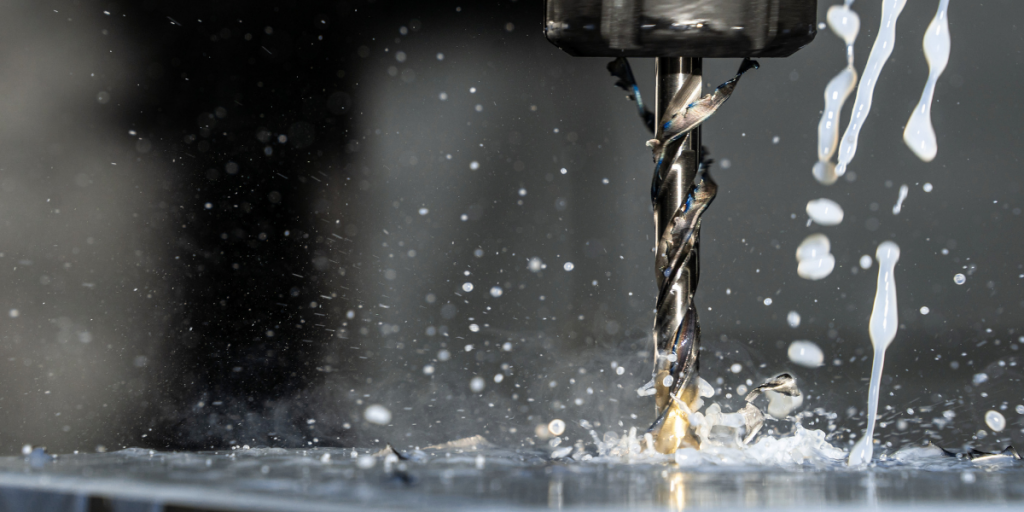
In CNC milling, FACTUREE uses a rotating tool that removes material from a workpiece. The machine’s movements are entirely controlled by a program. FACTUREE classifies CNC milling as a subtractive manufacturing process. In this process, material is selectively removed until the desired geometries are achieved.
The technological origins of CNC control date back to the 1970s. Since then, the technology has evolved into one of the most precise and reliable manufacturing processes.
The key difference from conventional milling lies in the control system. In conventional milling, an operator guides the tool manually, which requires experience and constant attention. In CNC milling, a program takes complete control of the tool path, spindle speed, and feed rate. This significantly improves repeatability and precision.
The CNC Milling Process: Step by Step
The CNC milling process is a precisely structured sequence of steps that ranges from digital design to final quality control. It involves several key phases.
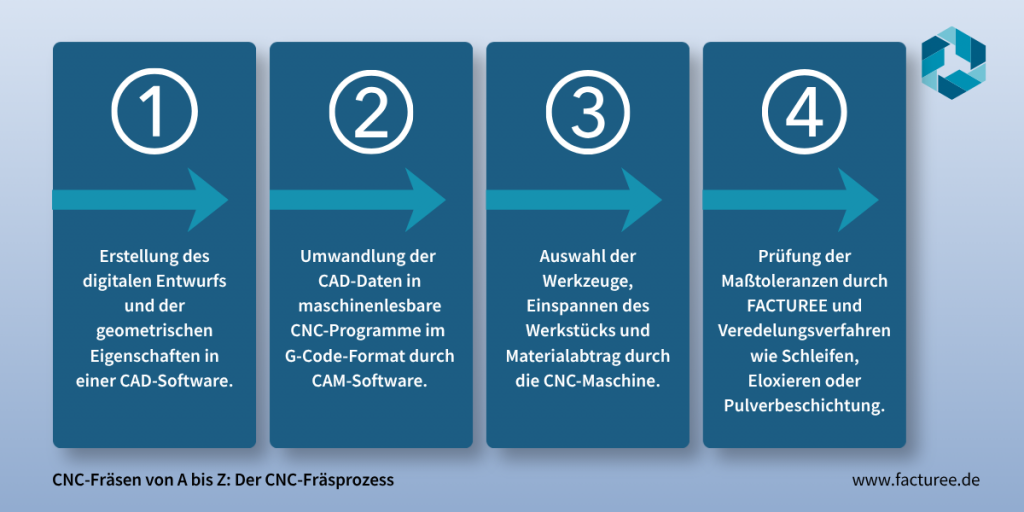
The steps in the CNC milling process can be summarized as follows:
Design
Every CNC milling project begins with the design phase in CAD software. This CAD-CAM process produces the digital design and the geometric properties of the resulting part, including all dimensions, tolerances, and functional surfaces.
Programming
In the next step, CAM software converts the CAD data into machine-readable CNC programs in G-code format. This code defines tool paths, cutting depth, spindle speed, and feed rate, and provides the exact operating instructions for the CNC machine.
Setup and Editing
Before the actual machining begins, the operator selects the appropriate tools and securely clamps the workpiece in place. The machine then executes the programmed movements and removes material until the target geometry is achieved.
Quality Control and Post-Processing
After machining, FACTUREE checks the dimensional tolerances of each component. Depending on the requirements, finishing processes such as grinding, anodizing, or powder coating are then performed to improve surface properties and appearance.
CNC Milling Machine: Design, Axes, Special-Purpose Machines
The CNC milling machine is at the heart of modern manufacturing and consists of various components, axis configurations, and specialized tables that, together, enable precise machining.
The Eight Key Components
A CNC milling machine consists of several key components that work together to enable precise machining.
Component |
Function |
| Chuck | Holds the milling tool securely in place |
| Tool spindle | Generates the rotational motion of the tool |
| Workpiece clamping | Secures the workpiece during machining |
| Tool-Changing Device | Automatically switches between different tools |
| Coolant-lubricant | Reduces friction and heat generation |
| Control Unit | Processes the G-code and controls all movements |
| Milling tool | Removes material from the workpiece |
| Control Panel | Enables manual control and monitoring |
Why is retraining a risk when switching suppliers?
The number of axes determines which geometries a CNC milling machine can machine.
- 3-axis machines are suitable for simple geometries involving movements along the X, Y, and Z axes.
- 4-axis machines include a rotational axis to allow for additional machining angles.
- 5-axis machines enable the machining of complex components and shapes, allowing for the machining of more complex geometries in a single operation—such as turbine blades—since the tool and workpiece can be moved simultaneously in five directions.
- Portal milling machines, on the other hand, are designed for large-format workpieces, in which the tool is guided over a fixed gantry.
Special Machine Tables
Console tables are height-adjustable and suitable for flexible clamping setups. Grid or matrix tables feature a grid of holes for quick workpiece clamping. Smooth tables provide a flat, continuous surface and are particularly well-suited for large or irregularly shaped workpieces.
Methods, Tools, and Kinematics
The success of CNC milling depends on the precise coordination of milling processes, machine kinematics, and the selection of the appropriate tools for the specific geometry.
An Overview of CNC Milling Processes
FACTUREE uses different milling processes depending on the component requirements:
- Face milling produces flat surfaces
- Profile milling follows complex contours
- Plunge milling is used for cutting grooves
- Finishing milling is used to achieve a high-quality finish
- Rough milling allows for rapid material removal during preliminary machining
- Hob cutting is primarily used for gears
- Circular milling produces cylindrical geometries
- 3D contour milling produces complex three-dimensional free-form surfaces
- Thread milling creates internal or external threads using a rotating tool
- Chamfer milling machines process edges and chamfers on components
- Trochoidal milling uses a circular tool path for high-performance machining that minimizes material removal.
- HSC milling operates at high cutting speeds with shallow cutting depths
- Hard milling machines hardened steels directly using the milling cutter as an alternative to grinding.
A Comparison of 3-Axis, 4-Axis, and 5-Axis Milling
| Criterion | 3-Axis Milling | 4-Axis Milling | 5-Axis Milling |
| Geometry | Simple, planar geometries machined from a single direction | An additional rotational axis enables machining on multiple sides without re-clamping | Complex free-form surfaces and contours in all spatial directions |
| Undercuts | Not possible without re-clamping the workpiece | Possible to a limited extent due to the axis of rotation | Made possible by the simultaneous movement of the tool and the workpiece |
| Tolerances | Good for standard tolerances | Greater accuracy due to fewer rewinding operations | Very tight tolerances, even for complex geometries |
| Costs | Lowest cost per component | Moderate cost level | Higher costs due to more complex machinery |
| delivery time | Fastest turnaround time for simple parts | Average Processing Time | Longer programming time, but fewer changeovers during production |
Types of Milling Cutters
Choosing the right milling cutter depends on the material and geometry.
Common types include shank cutters, torus cutters, radius cutters, face cutters, cylindrical end mills, ball-end mills, corner radius cutters, disc cutters, and thread cutters.
Carbide and diamond cutters are used for particularly abrasive or hard materials.
Variety of Materials in CNC Milling
Selecting the appropriate material is a critical factor in CNC milling, as the various material groups each have specific requirements regarding the milling process and tool selection.
Metals
Aluminum is valued for its light weight and is frequently used in lightweight construction. Steel offers high strength for components subjected to heavy loads. Titanium is used in medical technology and aerospace due to its biocompatibility and strength. Brass is often used for decorative applications and in electronics.
Plastics
Acrylic is suitable for applications where aesthetics are important; polycarbonate offers high impact resistance; and POM is characterized by low wear, making it particularly suitable for insulators or prototypes.
Wood and Wood-Based Materials
Milling hardwood and softwood requires different feed rates and tool geometries. Panel materials such as MDF, plywood, multiplex, and particleboard each have their own specific requirements for tools and dust extraction.
Fiber-reinforced composites
GFRP and CFRP are highly abrasive, which is why diamond tools and a special dust extraction system are required to reduce tool wear and dust exposure.
Advantages and disadvantages, as well as alternative manufacturing processes
Although CNC milling sets high standards for precision and flexibility, a comprehensive assessment of its advantages and disadvantages, as well as a comparison with other manufacturing processes, is crucial for selecting the optimal process.
Advantages of CNC Milling
The process offers high accuracy, high repeatability, and consistent quality; it reduces the risk of human error and enables the production of complex parts from a wide range of materials. Since every component in a series meets identical specifications, efficiency increases significantly.
FACTUREE also uses CNC milling for a wide range of materials and geometries. Since programs can be repeated as often as needed once they have been created, this process is suitable for both one-off pieces and larger production runs.
Disadvantages of CNC Milling
One disadvantage of CNC milling is the higher material removal rate, as excess material is generated as scrap, which has a direct impact on costs when working with expensive materials such as titanium. In addition, purchasing a CNC milling machine requires a significant initial investment as well as qualified personnel for programming and setup.
When dealing with highly complex internal cavities, CNC milling reaches its physical limits because the tool must be able to directly access every surface. In such cases, additive manufacturing often offers a more practical solution.
A Comparison of Alternatives
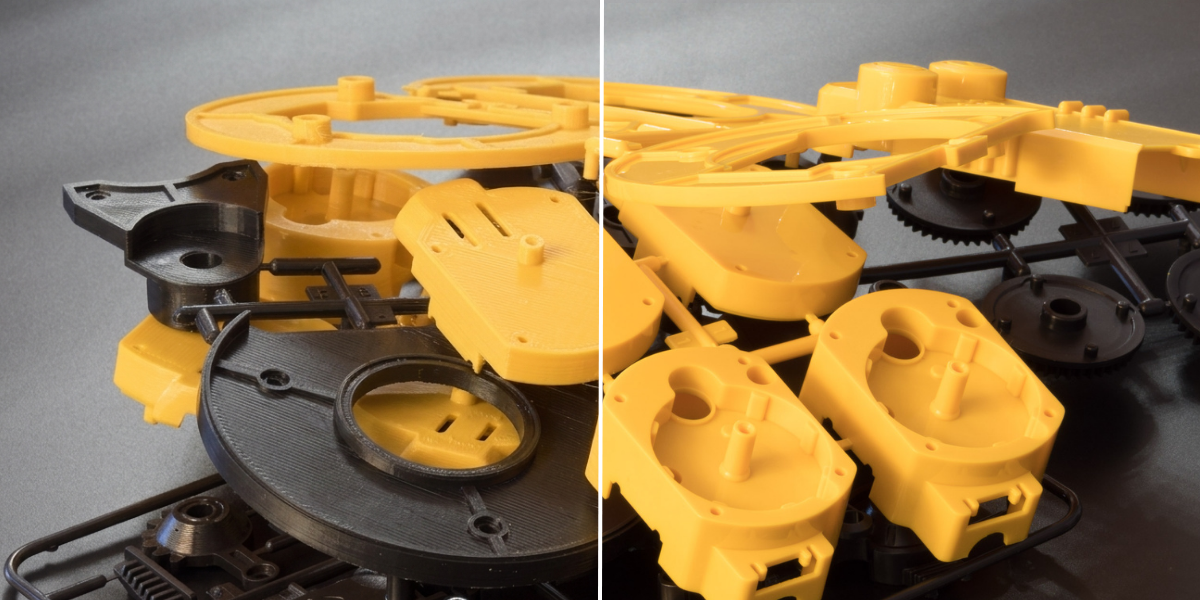
Additive manufacturing is better suited for parts with complex internal cavities and produces less scrap. Injection molding is more cost-effective for plastic parts produced in the millions, but requires a significant initial investment in the injection-molding tool.
Costs, Optimization, and Procurement
Pricing Factors
The price of a CNC-milled part depends on several factors. The material, complex geometries, quality of the CAD file, quantity, and required tight tolerances all contribute to the final price.
Process Optimization in Everyday Life
Specialized solutions, such as an additional milling table for quick manual finishing work performed in parallel with the actual CNC machining, help increase efficiency in day-to-day production.
CNC-Milled Parts at FACTUREE
FACTUREE is a digital procurement platform for custom-designed parts with a network of over 2,000 qualified manufacturing partners in Europe. We offer a wide range of manufacturing capabilities, with our network including certified CNC milling centers featuring 3-, 4-, and 5-axis technology, as well as CNC turning for metals, plastics, and composites. Through FACTUREE, you can have individual parts, prototypes, and small- to large-volume production runs CNC-milled with tight tolerances.
Are you looking for a CNC milling specialist with ISO 9001 or AS9100 certification, with 5-axis capabilities for complex free-form surfaces, or with experience in tight tolerance ranges? Here, too, we’ll find the right partner based on process specialization, machinery, and certification status—without a tedious search for suppliers!
At FACTUREE, CNC milling can be seamlessly combined with Surface Finishing such as anodizing and powder coating, with CNC turning for turned parts and heat-treated parts—all from a single source.
Your advantages with procurement via FACTUREE: A network of qualified, certified CNC milling shops (DIN EN ISO 9001, AS9100, NADCAP) | Quick quotes for individual parts, prototypes, and series production, from 3-axis to 5-axis machining | Direct inquiries with material, drawing, tolerance specifications, and quantity | Technical support for material selection, milling processes, and design optimization provided by a team of experts | CNC milling can be combined with turning, surface finishing, and heat treatment—all from a single source.
Editorial Note: This guide was developed in collaboration with FACTUREE’s manufacturing technology experts, who draw on years of experience in coordinating certified production processes. All information is provided for guidance only; only project-specific reviews and agreements are binding.
Frequently asked questions about CNC milling
What is the difference between CNC milling and CNC turning?
FACTUREE distinguishes between the two processes based on the movement of the workpiece. In CNC milling, the tool rotates while the workpiece usually remains stationary. In CNC turning, on the other hand, the workpiece rotates while a stationary tool removes material.
What materials can FACTUREE process using CNC milling?
FACTUREE processes a wide range of materials, including metals such as aluminum, steel, titanium, and brass; plastics such as acrylic, polycarbonate, and POM; as well as wood-based materials and fiber-reinforced composites such as GRP and CFRP.
How long does it take to manufacture a CNC-milled part at FACTUREE?
FACTUREE determines delivery times based on the complexity, material, and quantity of the component. Through the online platform, customers receive a binding estimate of the expected delivery time as early as the quotation stage.
What axis systems does FACTUREE use for CNC milling?
Depending on component requirements, FACTUREE uses 3-, 4-, and 5-axis machines. Complex free-form geometries are produced on 5-axis machines through the company’s certified partner network.
Is CNC milling suitable for individual parts and prototypes?
FACTUREE manufactures individual parts and prototypes as well as mass-produced components. The digital ordering process is scalable and covers both use cases through the same workflow.

 Deutsch
  English
  Español
  Français
  Italiano