
Waterjet cutting online: Guaranteed 20 % cost savings

Waterjet cutting online: From material selection to delivery date. You can rely on your fixed contact person for waterjet parts.

Our offer

Waterjet cutting: Online, fast and safe from a single source

Experience the future of waterjet cutting with FACTUREE. In contrast to traditional manufacturing, ordering with us is simple and digital. Use our intuitive online tool to configure your components and receive a quote in the shortest possible time - usually on the same day. Your benefit: maximum efficiency without complex processes.

Extensive network

Our global network of 2,000+ certified manufacturers ensures short delivery times - including express delivery for your waterjet parts if required. We have over 300 materials available for prototypes as well as small and large series.

One contact person

Are you looking for Components through water with reliable quality and personal service? Our high quality standard, ISO 9001-certified management and your fixed contact person create trust and security.

From a single source

FACTUREE is your partner for modern, digital, efficient Water jet cutting— everything from a single source. Simply upload your design, receive personalised advice, and begin production. Ordering Water jet parts parts online has never been easier.

Manufacturing process

Waterjet cutting with FACTUREE

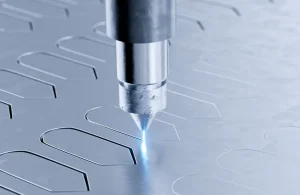
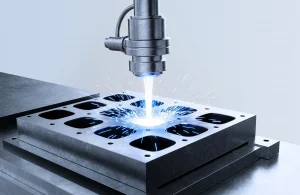
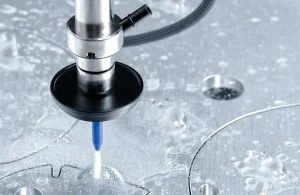
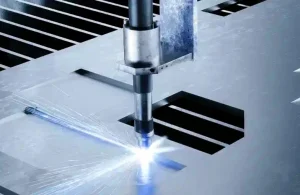
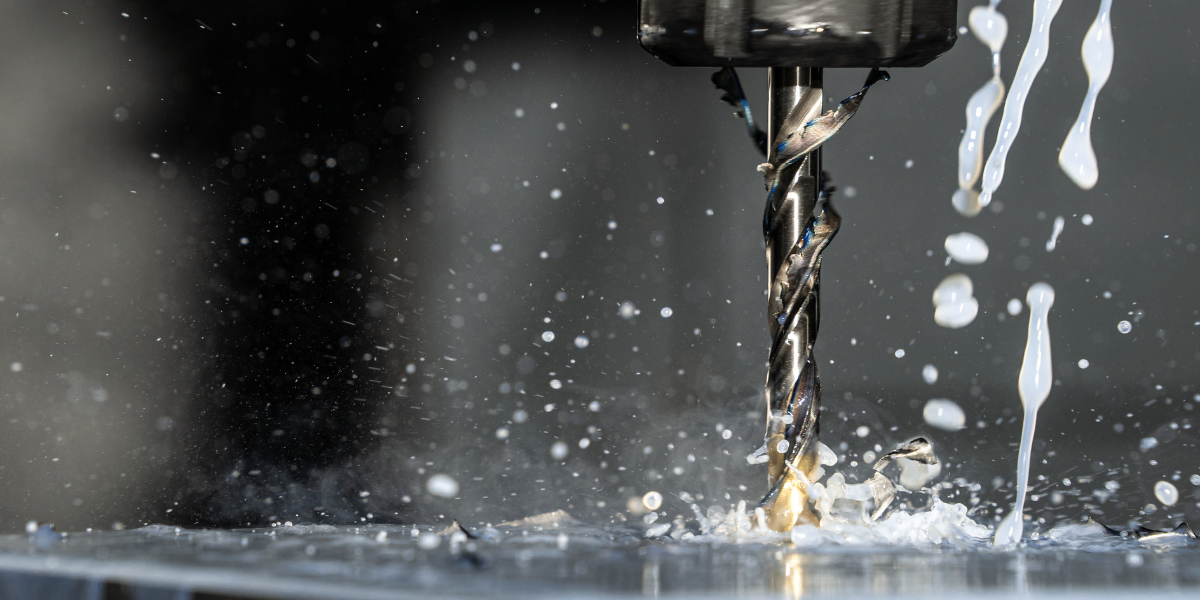
Waterjet cutting is a high-precision, CNC-controlled cold cutting process. A supersonic water jet, which is generated at a pressure of 3,600 to 6,200 bar, cuts materials with an outstanding precision of ±0.01 to ±0.1 mm. The result is burr-free cuts with excellent surface quality that often require no post-processing.

Waterjet cutting online at FACTUREE: Best price guarantee of 20 % on all waterjet parts

The decisive advantage is the "cold cut", which avoids thermal deformation, stresses or structural changes to the workpiece. Although it is slower than laser cutting, it can also cut very thick (up to 300 mm), reflective or heat-sensitive materials. The variety is enormous: metals, plastics, glass, stone, composite materials and even food can be processed.

There are two main processes: Pure water cutting for soft materials (e.g. foams) and abrasive cutting, in which garnet sand is added for cutting hard materials such as steel or ceramics. Modern 3D waterjet cutting also uses 5-axis technology for complex, three-dimensional shapes and bevels.

Ideal for prototypes and small series, it is used in industries such as mechanical engineering, aerospace, medical technology and electronics.

Materials

Our materials for your waterjet parts

The right choice of material is the key to the performance and quality of your Water jet parts. It ensures ideal technical properties and a flawless appearance. FACTUREE offers you an unsurpassed selection of hundreds of materials: from various steels and aluminum alloys to high-performance plastics. We guarantee constant availability for your entire project and thus ensure the functionality and top quality of your components, from prototype to series production.

Frequently requested materials

Waterjet cutting is perfect for processing steel, as it is defined as a pure cold cut. Unlike laser or plasma cutting, no heat is generated, which means that the material structure of steels - even hardened stainless steel - remains unchanged and retains its original properties. This decisive advantage prevents any distortion, hardening or the introduction of stresses into the workpiece. 

The cut itself is made using the abrasive cutting process, in which a fine, sharp-edged abrasive such as garnet sand is added to the high-pressure water jet. This high-energy jet removes the steel precisely chip by chip, resulting in burr-free edges and an excellent surface finish. It is therefore the best choice when heat input must be avoided, for very thick materials, filigree contours without deformation or when no post-processing of the cut edges is desired. 

It is used wherever maximum precision is required: in mechanical and plant engineering, aerospace, tool and mold making and in the automotive industry.

Frequently requested:

  • EN 10088-3 | 1.4301 | X5CrNi18-10
  • EN 10025-2 | 1.0577 | S355J2
  • EN ISO 4957 | 1.2379 | X153CrMoV12
  • EN 10132-4 | 1.8714 | 400 HBW (Comparable with Hardox 400)
  • EN 10083-3 | 1.7225 | 42CrMo4

Waterjet cutting is the superior method for brittle materials such as stone and ceramics. The decisive reason is the absolutely cold cut: it avoids any heat stress and thermal shock, completely eliminating the risk of micro-cracks or fractures.

The cut itself is made using the abrasive process. A high-pressure accelerated water jet, mixed with sharp-edged garnet sand, erodes the material in a precise process of micro-erosion. This exerts only minimal mechanical stress on the workpiece. It is therefore the best choice when complex geometries, intricate internal cut-outs or detailed inlays in tiles or marble are required, which would be impossible with traditional saws, or when the risk of breakage is too high with delicate materials.

The technology is used in architecture for exclusive floor coverings and kitchen worktops, in the construction industry for façade elements, in stonemasonry for ornaments and in industry for high-strength components made of technical ceramics.

Frequently requested:

  • Marble:Marble: EN 12440 | e.g. Carrara marble (calcium carbonate)
  • Granite: EN 12440 | e.g. Nero Assoluto (hard stone)
  • Tiles (general): EN 14411 | Ceramic tiles and slabs
  • Porcelain stoneware EN 14411 (Group BIa) | Porcelain stoneware (low water absorption)
  • Technical ceramics: EN 60672 (group C799) | Al₂O₃ (aluminum oxide 99.7 %)

Waterjet cutting is the ideal method for non-ferrous metals such as aluminum, copper or titanium. The decisive advantage is the "cold cut": it prevents any heat input so that the specific properties of the metals, such as the conductivity of copper, are fully retained. There is no distortion, no melting edges and no structural changes. Even highly reflective surfaces, where lasers often fail, can be processed effortlessly and safely.

All non-ferrous metals are separated using the abrasive process. A high-pressure accelerated water jet is mixed with fine abrasive sand. This jet erodes the metal purely mechanically and produces precise, burr-free contours with an excellent surface finish. The process is always the best choice when thick materials, heat-sensitive alloys or intricate geometries without thermal stress are required. 

It is used in the aerospace industry (titanium, aluminum), in electronics (copper), in mechanical engineering (brass) and in architecture (bronze).

Frequently requested:

  • Aluminum: EN AW-6082 | 3.2315 | AlSi1MgMn
  • Copper (for electrical engineering:) EN CW004A | 2.0065 | Cu-ETP
  • Brass (machining brass): EN CW614N | 2.0401 | CuZn39Pb3
  • Titanium (high-strength alloy): ASTM Grade 5 | 3.7165 | Ti-6Al-4V
  • Bronze: EN CW453K | 2.1030 | CuSn8

Waterjet cutting is the ideal process for plastics, as the pure cold cut completely avoids thermal damage such as melting, discoloration or toxic fumes. Mechanical stress, which can lead to cracks in brittle plastics such as acrylic glass (Plexiglas®), is also completely eliminated.

The cutting method depends on the material: soft materials such as foam or rubber are cut using the pure water method. For hard, thick or fiber-reinforced plastics (GRP/CFRP, PVC, polycarbonate), a fine abrasive is added to the water jet. This process is always the best choice when filigree contours are required, the material cannot tolerate heat or the fibers of composite materials must not fray.

It is therefore used in advertising technology (logos, letters), in mechanical engineering for precision parts, in the automotive and aviation industries for cladding and for the production of precisely fitting seals and foam inserts for the packaging industry.

Frequently requested:

  • Acrylic glass (Plexiglas®) EN ISO 1043-1 | PMMA (polymethyl methacrylate)
  • Polycarbonate (Makrolon®, Lexan®) EN ISO 1043-1 | PC (polycarbonate)
  • Engineering plastic (Delrin®) EN ISO 1043-1 | POM (polyoxymethylene)
  • Rigid PVC EN ISO 1043-1 | PVC-U (polyvinyl chloride, plasticizer-free)
  • GRP (fiberglass-plastic composite)

Surface treatments

Waterjet cutting with surface treatment

Professional surface treatment after waterjet cutting is crucial to unleash the full potential of your components. It optimizes the mechanical properties, protects against wear and corrosion and guarantees a flawless appearance. From blasting to hardening to anodizing - we offer the ideal finishing for the highest demands. At FACTUREE, you receive the entire process from a single source for a ready-to-install result that impresses in terms of function and aesthetics.

Frequently requested surface treatments

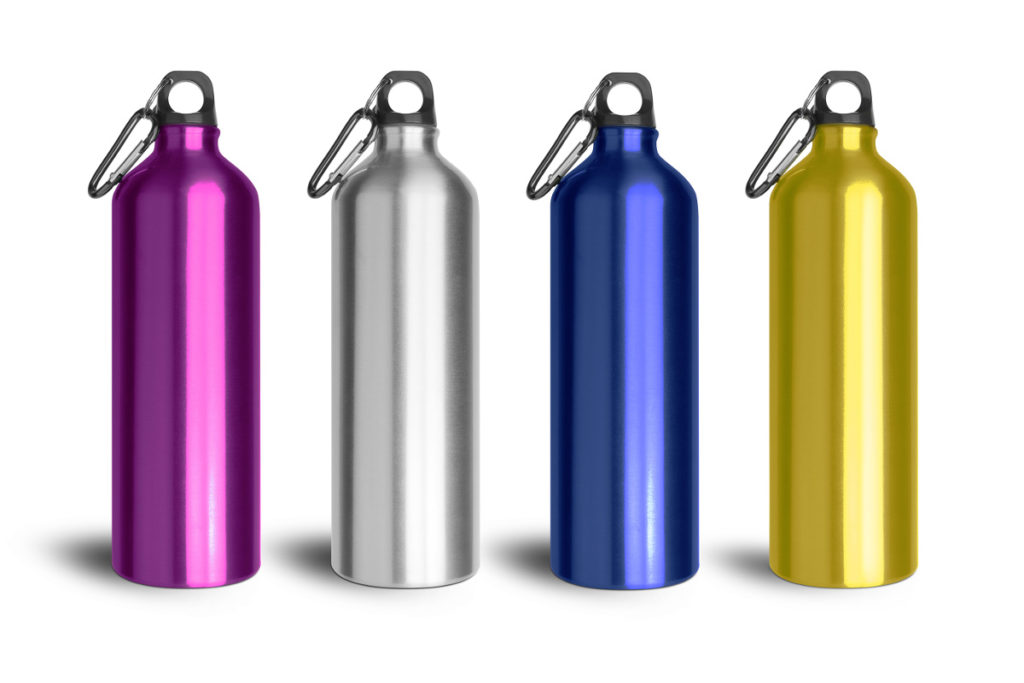
Anodized aluminium deep-drawn parts (drinking bottles)
  • Anodizing
  • Powder coating
  • Black finishing
  • Passivating
  • Nickel plating
  • Galvanizing (zinc plating)
  • etc.
  • Glass bead blasting
  • Polishing
  • Electropolishing
  • etc.
  • (Laser) engraving
  • Deburring
  • Drilling
  • Countersinking
  • Thread cutting
  • Reaming (fitting)
  • Stud welding
  • Pressing in
  • etc.

Contact person

Your waterjet cutting experts at FACTUREE

Digitally fast, personally supported: we define service at the Water jet cutting new. Our platform combines the efficiency of online inquiries with individual support from a dedicated contact person. While you conveniently request your waterjet parts online, your personal expert with technical expertise optimizes the entire process. From quotation to delivery, everything is tailored to your requirements. This gives you maximum speed without having to forego the security of expert advice. Get to know FACTUREE here.

Billy Schulz
Head of Operations
schulz@facturee.de

Tel: +49(0) 30 629 3939-10

Portrait photo by Antonio Scala for FACTUREE - The online finisher

Antonio Scala
Team Lead IT/ES/EN
antonio.scala@facturee.de

Tel: +49(0) 30 629 3939-30

Walid Tlili
Team Lead FR/EN
walid.tlili@facturee.de
Phone: +49(0) 30 629 3939-19

Figures

Facts instead of promises

10k

Successful projects 
per year

30k

Customers trust
in FACTUREE

9-12

Working days until
delivery time

37%

Savings on
average

Major projects

From prototype to series production: scalable production with waterjet cutting

We are your partner for the entire product life cycle. We start with prototypes that are precisely cut from the final material without tooling costs - ideal for validation. We then enable maximum flexibility for your market launch with small series.

We make full use of the strengths of waterjet cutting for large-scale production: Intelligent nesting minimizes material consumption, while stack cutting of multiple sheets drastically reduces production time. This allows us to remain cost-efficient even when producing large quantities.

We secure your long-term production through framework agreements - for guaranteed quantities, stable prices and maximum planning security.

No time to lose in the development phase: our prototyping service is designed for maximum speed. Our digital platform gives you immediate access to free capacity in our huge production network, thus avoiding traditional waiting times. The result: high-precision waterjet prototypes in top quality, delivered in the shortest possible time - so that your project stays on schedule.

For us, high quantities do not mean high unit prices. We optimize the cost-effectiveness of your series production using technologies that are perfectly adapted to waterjet cutting. By intelligently nesting your components on the raw material, we drastically minimize waste. With stack cutting, we cut several layers of material simultaneously and thus multiply the production speed. Our platform selects the ideal paver for your requirements to ensure maximum efficiency. The result: first-class quality and a price that is convincing even with high quantities.

Combine the security of a framework agreement with the unique flexibility of waterjet cutting. Secure quotas for entire component families and call up different variants as required - a simple adjustment of the CNC file is all it takes. You benefit from price stability and guaranteed availability. Thanks to the ability to plan, we can also make optimum use of material through intelligent nesting and thus further reduce your unit costs.

Reasons for FACTUREE

Numerous advantages over conventional contract manufacturing

Fast

  • Consistently short delivery times
  • Same day offer in most cases
  • Simple online inquiry Europe-wide
  • Express shipping

Versatile

  • Broadest manufacturing range in the market
  • Prototyping, small and large series
  • 300+ materials available at all times
  • From a single source

Reliable

  • Unlimited production capacity
  • Low complaint rate
  • ISO 9001 certified quality management Download
  • Personal customer support

REFERENCES

From industry to cutting-edge international research - more than 30,000 satisfied customers

FAQ

Frequently asked questions about waterjet cutting

Waterjet cutting is a cold cutting process that separates material by erosion. Water is compressed to extremely high pressure (up to 6,000 bar) and forced through a tiny nozzle. The result is a supersonic jet of water that cuts the workpiece precisely without subjecting it to thermal or mechanical stress. For hard materials, a sharp-edged abrasive is added to the water, which multiplies the cutting performance. The entire process is CNC-controlled for maximum precision.

Almost any material can be cut with a water jet. Soft materials such as rubber, foam or seals are cut with pure water. An abrasive is used for hard materials. These include almost all metals (steel, aluminum, titanium, copper), stone (marble, granite), ceramics, glass (including bulletproof glass), plastics (acrylic glass, PVC) and modern composite materials such as carbon (CFRP). This enormous variety of materials is one of the greatest advantages of the process.

The actual "tool" is the water jet itself, there is no direct tool contact. The system consists of a high-pressure pump, which generates the water pressure, and a CNC-controlled cutting head. This focuses the water jet through an extremely small nozzle made of diamond or sapphire. For abrasive cutting, a mixing chamber is added in which the cutting agent (usually garnet sand) is mixed into the water. It is a low-wear, non-contact process.

The achievable tolerances are very high and depend on the material thickness and cutting speed. Usual general tolerances are in the range of ±0.1 mm to ±0.3 mm, which corresponds to tolerance class "medium" (m) according to DIN ISO 2768. For demanding applications, significantly tighter tolerances of up to ±0.05 mm can be achieved by using slower cutting speeds or 5-axis cutting heads that correct the cutting angle error.

The difference lies in the cutting medium. With the Pure water cutting only the pure, highly concentrated water jet is used to separate soft, cellular or fibrous materials (e.g. foam, rubber). With the Abrasive cutting a sharp-edged abrasive (usually garnet sand) is added to the water jet in a mixing chamber. The water jet serves as an accelerator for the sand grains, which then erode hard materials such as metal, stone or glass.

Due to the variety of materials and the cold cut, the process is used in numerous industries. The main users are mechanical and plant engineering (precision parts), aerospace (titanium, composite materials), the automotive industry (prototypes), medical technology and advertising technology (logos made of acrylic glass). Other important sectors include architecture (tiles, stone inlays), the electrical industry (copper parts) and even the food industry.

The process is ideal for products that require precision, complex contours and a gentle cut. Typical products include machine parts made of steel or aluminum, flanges, rubber seals, precisely fitting foam inserts for packaging, individual floor mosaics made of tiles or stone, letters and logos for advertising technology as well as prototypes and small series components made of almost any conceivable material, especially if it is thick or heat-sensitive.

The biggest advantage is the "cold cut": no heat is generated, therefore no thermal distortion, no hardening and no structural changes to the material. Further advantages are the enormous variety of materials (including thick, reflective or composite materials), high precision, burr-free cut edges (often no post-processing required) and environmental friendliness, as no harmful gases or vapors are produced. It is also a very gentle, stress-free cutting process.

Compared to thermal processes such as laser or plasma cutting, the cutting speed is often lower, especially for thin sheets. This can lead to higher unit costs for simple large series. In addition, a slight taper (V-shape) occurs at the cutting edge, but this can be compensated for with modern 5-axis technology. The energy consumption of the high-pressure pumps is high and the disposal of the abrasive sludge requires a certain logistical effort.

Manufacturing at FACTUREE is a simple online process. You upload your 3D CAD or DXF data directly to our platform, select the desired material from a huge selection and define the quantity and other specifications. Within a short time, usually on the same day, you will receive a binding offer. Once you have placed your order, your project is automatically assigned to the ideal manufacturer from our network and you receive your finished parts on the desired date.

Online manufacturing via FACTUREE offers enormous speed and efficiency benefits. You get immediate access to a huge network of manufacturing capacities and don't have to search long for a suitable supplier. The process is transparent and simple: upload CAD data, receive a quote immediately and order online. Thanks to the competition in the network, you benefit from optimized prices and the shortest delivery times. Everything is handled via one platform - from a single source.

Yes, absolutely. FACTUREE specializes in the production of prototypes, individual parts and small batches. There is no minimum order quantity. As a tool-free process, waterjet cutting in particular is ideal for the economical production of batch size 1. You can easily request a single component for validation, for a repair or for a one-off project and receive the same high quality and fast service as with a series order.

FACTUREE ensures the highest quality through a carefully audited production network whose partners are all ISO 9001 certified. Their technical drawings with the specified shape and position tolerances are the binding basis for production. Our partners use modern machines, often with 5-axis cutting heads that actively compensate for typical cutting angle errors. Continuous quality management and test protocols ensure compliance with your specifications.

resources

Whitepaper media library

Simple and future-proof procurement

FACTUREE has analyzed the biggest challenges and needs in procurement in a comprehensive market research study. This white paper provides exclusive study results and shows how companies can reduce complexity in sourcing, optimize processes and future-proof their procurement.

November 2024

Series production companies find themselves in an unprecedented situation in terms of procurement. as far as procurement is concerned. Uncertainties and crises create difficult conditions and often make even short-term planning impossible. At the same time, it is important to to realign themselves in the course of digitalization and react to constantly changing competitive situations.

16 pages

Online Manufacturing – Procurement advantages in series

February 2023
News and dates

News, case studies, dates and trade fairs and general

Close-up of a worker inserting a piece of sheet metal into a press brake to bend it. You can see the upper and lower tools of the machine and the worker's hands positioning the sheet metal on the bending line.

Sheet metal bending: Basics & tips

Table of contents How does sheet metal bending workHow does the bending process workWhat do you need to consider when bending sheet metalAn overview of important bending processesTolerances for bent parts: What is...

All posts