
Order plasma parts online: Guaranteed 20 % cost savings

Order plasma parts online: From material selection to delivery date. You can rely on your fixed contact person for plasma cutting.

Our offer

Plasma cutting: Online, fast and safe from a single source

Put an end to complex and time-consuming plasma cutting processes. Welcome to the future of manufacturing! With FACTUREE, cumbersome inquiries by e-mail or telephone are a thing of the past. Instead, configure your plasma parts directly online, upload your CAD data and receive your quote in record time - usually today. Experience maximum efficiency with our three core competencies:

Extensive network

Benefit from our global network of over 2,000 manufacturers for your plasma parts. This ensures maximum capacity and short delivery times, including express delivery. Whether prototypes, small or large series - over 300 materials are available to you. 

One contact person

Rely on certified safety for your plasma parts. Our quality management is ISO 9001-certified and guarantees the best results. Coupled with your fixed contact partner, we offer trust and security for every project.

From a single source

FACTUREE is your partner for modern, digital, efficient Plasma cutting— everything from a single source. Simply upload your design, receive personalised advice, and begin production. Ordering Plasma parts Calculate and order online has never been easier.

Manufacturing process

Plasma cutting with FACTUREE

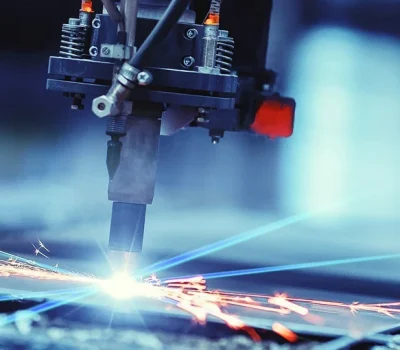
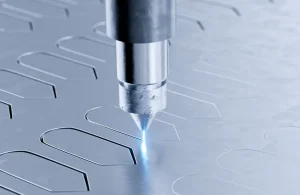
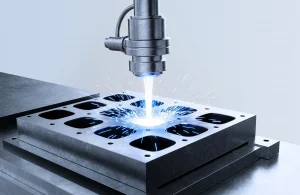
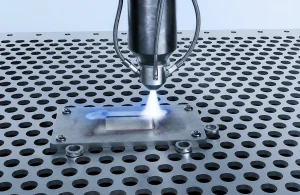
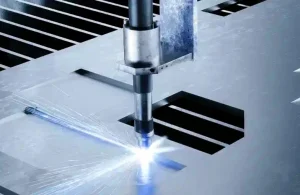
With the CNC-controlled Plasma cutting a plasma jet heated to over 20,000 °C separates electrically conductive metals. Its main advantage is its high speed and efficiency with medium to high material thicknesses. Depending on the system, the precision is ±0.2 to ±1.5 mm. It produces very fast cuts with a good surface, but also a heat-affected zone (HAZ), which modern processes minimize.

facturee-plasma-cutting

It is often faster than lasers for thick sheet metal and more precise than oxyfuel cutting. It also cuts stainless steel and aluminum. All conductive metals such as steel, stainless steel, aluminum and copper up to a thickness of approx. 160 mm can be processed.

A distinction is made between conventional and precision (HD) plasma cutting, which uses special gases to achieve tighter tolerances and edges with fewer burrs. Modern 5-axis technology enables complex 3D bevel cuts, for example for weld seam preparations. 

Ideal for prototypes to large series, it is used in steel, plant, ship and vehicle construction.

Materials

Our materials for your plasma parts

The performance and quality of your Plasma parts begins with the choice of material. It determines the technical properties and the final appearance. At FACTUREE, you have access to a large selection of hundreds of metals: from structural steels, stainless steels and aluminum alloys to non-ferrous metals. 

For plasma cutting, it is important that the material can conduct electricity. Then it is generally suitable for plasma cutting. Non-conductive materials such as wood, plastic, glass or ceramics cannot be cut using this process. We ensure the continuous availability of materials for your entire project and thus guarantee the highest functionality and top quality of your components - from individual items to large-scale production.

Frequently requested materials

Unalloyed and low-alloy steels are cost-effective standard materials with good strength, formability and weldability. They are ideal for plasma cutting as their electrical conductivity and metallurgical structure allow extremely high cutting speeds, making the process highly efficient.

Dimensionally stable parts with smooth surfaces and low burr formation are achieved with HD plasma systems in particular. A narrow heat-affected zone (HAZ), which slightly changes the hardness at the edge, is typical.

The process is flexible and suitable for all batch sizes from prototypes to large series. Its strengths are particularly evident in medium to very thick materials, where it is unbeatably economical.

Typical industries are steel construction, mechanical engineering, plant construction, shipbuilding and vehicle construction.

Frequently requested:

  • General structural steel: S235JR | 1.0038 | St37-2 (old designation)
  • High-strength structural steel: S355J2+N | 1.0577 | St52-3N (old designation)
  • Unalloyed quenched and tempered steel: C45 | 1.0503 
  • Boiler plate / pressure vessel steel: P265GH | 1.0425 | H II (old designation)
  • Wear-resistant steel (low-alloy): Hardox 400 | (no material no.)

High-alloy steels, especially stainless steels, are ideal for plasma cutting. This process offers high cutting speed and quality combined with high efficiency. HD plasma systems enable precise components with bright surfaces and low burr formation. The narrow heat-affected zone influences the corrosion resistance at the edge. Flexible in use, it is economical for medium to very high material thicknesses, as an alternative to laser or water jet cutting.

The choice of plasma gas is a crucial aspect. Inert gases (e.g. nitrogen, argon-hydrogen) are used instead of oxygen. This prevents oxidation of the cut edge, maintains corrosion resistance and produces a high-quality, bright metallic surface.

Typical sectors include the food industry, chemical plant engineering, medical technology, architecture and pharmaceutical and environmental technology.

Frequently requested:

  • Standard stainless steel (V2A): X5CrNi18-10 | 1.4301 | AISI 304
  • Acid-resistant stainless steel (V4A): X2CrNiMo17-12-2 | 1.4404 | AISI 316L
  • Stabilized stainless steel (V4A): X6CrNiMoTi17-12-2 | 1.4571 | AISI 316Ti
  • Ferritic stainless steel: X6Cr17 | 1.4016 | AISI 430
  • Duplex steel: X2CrNiMoN22-5-3 | 1.4462

Light metals such as aluminum and titanium are ideal for plasma cutting due to their low weight and specific properties. The process offers the high speed required to control the heat input and minimize distortion. HD plasma systems produce high-precision components with clean surfaces and low burr formation. The narrow heat-affected zone can influence the strength (e.g. in hardened aluminum alloys) at the edge. Flexible in use, it is a very economical method for medium to high material thicknesses.

The choice of plasma gas is a crucial aspect. Inert gases (e.g. nitrogen, argon-hydrogen) are used instead of oxygen. This prevents the formation of a hard oxide layer, preserves the material properties and produces a high-quality, bright metallic surface.

Typical industries include aerospace, vehicle and shipbuilding, mechanical engineering and architecture.

Frequently requested:

  • Standard aluminum: EN AW-5754 | 3.3535 | AlMg3
  • Construction aluminum: EN AW-6082 | 3.2315 | AlSi1MgMn
  • Seawater resistant Aluminum: EN AW-5083 | 3.3547 | AlMg4,5Mn
  • Pure titanium (Grade 2): Titanium Grade 2 | 3.7035 
  • Titanium alloy (Grade 5): TiAl6V4 | 3.7165 

Non-ferrous metals such as copper and brass are ideal for plasma cutting due to their extremely high thermal conductivity. The process introduces energy very quickly and in a concentrated form, which minimizes heat loss and enables clean cuts. HD plasma systems produce high-precision components with smooth surfaces and low burr formation. The narrow heat-affected zone can lead to a structural change (soft annealing) at the edge. Flexible in use, it is a very economical method for medium to high material thicknesses.

The choice of plasma gas is a crucial aspect. Instead of oxygen, inert gases (e.g. nitrogen, argon-hydrogen) are used. This prevents oxidation of the cut edge and produces a high-quality, bright metallic surface, which is particularly important for the electrical conductivity of contact surfaces.

Typical sectors include electrical engineering, plant and apparatus engineering, sanitary engineering, art and architecture.

Frequently requested:

  • Electrolytic copper: Cu-ETP | CW004A | E-Cu57
  • Standard brass: CuZn37 | CW508L | Ms63
  • Turned brass: CuZn39Pb3 | CW614N | Ms58
  • Standard bronze: CuSn8 | CW453K

Surface treatments

Plasma cutting with surface treatment

Follow-up treatment after the Plasma cutting is a crucial step in completing the quality of your components. It improves mechanical resilience, provides protection against corrosion and ensures a perfect visual finish. Whether deburring, hardening or painting - we will find the right finish for your application. FACTUREE supplies you with the complete process from a single source. This gives you ready-to-install components that impress with maximum functionality and flawless aesthetics.

Frequently requested surface treatments

Anodized aluminium deep-drawn parts (drinking bottles)
  • Anodizing
  • Powder coating
  • Black finishing
  • Passivating
  • Nickel plating
  • Galvanizing (zinc plating)
  • etc.
  • Glass bead blasting
  • Polishing
  • Electropolishing
  • etc.
  • (Laser) engraving
  • Deburring
  • Drilling
  • Countersinking
  • Thread cutting
  • Reaming (fitting)
  • Stud welding
  • Pressing in
  • etc.

Contact person

Your plasma cutting experts at FACTUREE

Experience maximum speed with the Plasma cuttingwithout sacrificing personal advice. Our service platform combines the best of both worlds: You ask your Plasma parts and your personal expert will optimize the entire process in the background with technical expertise. This gives you fast results and the security of competent support from quotation to delivery. Get to know FACTUREE here.

Billy Schulz
Head of Operations
schulz@facturee.de

Tel: +49(0) 30 629 3939-10

Portrait photo by Antonio Scala for FACTUREE - The online finisher

Antonio Scala
Team Lead IT/ES/EN
antonio.scala@facturee.de

Tel: +49(0) 30 629 3939-30

Walid Tlili
Team Lead FR/EN
walid.tlili@facturee.de
Phone: +49(0) 30 629 3939-19

Figures

Facts instead of promises

10k

Successful projects 
per year

30k

Customers trust
in FACTUREE

9-12

Working days until
delivery time

37%

Savings on
average

Major projects

From prototype to series production: scalable production of your plasma parts

We support you throughout the entire product life cycle of your plasma parts. It starts with precise prototypes made from original material, which facilitate validation without tooling costs. 

After that, small series ensure the necessary flexibility for your market entry. Plasma cutting shows its greatest strength in large series production: its enormous speed. Coupled with intelligent nesting to save material, we reduce the production time per component to a minimum. As a result, we guarantee maximum cost efficiency even with high quantities. 

We secure your long-term requirements with framework agreements that give you fixed prices, guaranteed quantities and maximum planning security.

Accelerate your development phase: Our prototyping service utilizes the enormous speed of plasma cutting. Our digital platform gives you immediate access to free production capacity and avoids traditional waiting times. The result: dimensionally accurate plasma prototypes in top quality, delivered in record time so that your project can progress without delay.

We optimize the cost-effectiveness of your plasma parts using state-of-the-art processes. Intelligent nesting on the raw material ensures minimal waste, while the enormous speed of plasma cutting drastically reduces production time. Our platform also selects the ideal paver for your series to guarantee maximum efficiency. The result: first-class quality at a price that remains competitive even for large series.

Plan for the long term and stay flexible - with a framework agreement for your Plasma parts. Ensure availability and price stability for your component families and simply call up individual variants as required. Thanks to digital production via Plasma cutting a customized CNC file is sufficient. Your long-term planning enables us to achieve optimum material utilization through intelligent nesting, allowing us to reduce your unit prices even further.

Reasons for FACTUREE

Numerous advantages over conventional contract manufacturing

Fast

  • Consistently short delivery times
  • Same day offer in most cases
  • Simple online inquiry Europe-wide
  • Express shipping

Versatile

  • Broadest manufacturing range in the market
  • Prototyping, small and large series
  • 300+ materials available at all times
  • From a single source

Reliable

  • Unlimited production capacity
  • Low complaint rate
  • ISO 9001 certified quality management Download
  • Personal customer support

REFERENCES

From industry to cutting-edge international research - more than 30,000 satisfied customers

FAQ

Frequently asked questions about plasma cutting

Plasma cutting is a thermal fusion cutting process for machining electrically conductive metals. It is characterized by very high cutting speeds and high efficiency, especially for medium to thick materials. The process is versatile and is suitable for cutting mild steel, stainless steel, aluminum and other non-ferrous metals. It is used in industry for 2D cuts, but also for bevel cuts for weld seam preparation.

A plasma cutter generates an electric arc between an electrode in the nozzle and the workpiece. A gas (e.g. compressed air, oxygen) flows through this arc, which is heated to an extreme temperature and thus transformed into the fourth state of matter: Plasma. This concentrated jet of plasma at temperatures of up to 30,000 °C melts the metal with pinpoint accuracy. A secondary gas stream then blows the molten metal out of the kerf, completing the separation.

All electrically conductive metals can be processed with plasma cutting. The most common materials are

  • Unalloyed & low-alloy steels: e.g. structural steel (S235, S355)
  • High-alloy steels: especially stainless steel (V2A, V4A)
  • Light metals: aluminum and its alloys
  • Non-ferrous metals: copper, brass and titanium

Non-conductive materials such as wood, plastic or glass cannot be cut.

Several core components are required for industrial plasma cutting:

  1. A power source that supplies the necessary direct current.
  2. A plasma torch with wearing parts (electrode, nozzle).
  3. A gas supply (e.g. air compressor or gas cylinders for oxygen, nitrogen).
  4. A CNC-controlled guide machine that moves the torch precisely over the workpiece.
  5. An earth cable with terminal for the circuit to the workpiece.

The tolerances depend heavily on the system technology used (conventional vs. HD plasma) and the material thickness. With high-resolution HD plasma cutting, precision in accordance with the ISO 9013 standard can be achieved. Usual tolerances range from approx. ±0.2 mm for thin sheets to ±2.0 mm for very thick sheets. This accuracy is perfectly adequate for many applications in steel and mechanical engineering.

Advantages:

  • Very high cutting speed, especially for medium thicknesses
  • High efficiency and low costs per cutting meter
  • Suitable for all conductive metals
  • High material thicknesses (up to approx. 160 mm) can be cut

Disadvantages:

  • Thermal input creates a heat-affected zone (HAZ)
  • Lower precision than with laser or waterjet cutting
  • Heavy smoke and noise development
  • Cut edge is not always burr-free

Plasma cutting is established in many metalworking industries due to its robustness and cost-effectiveness. These include, in particular, steel and plant construction, mechanical engineering, shipbuilding and vehicle construction (especially commercial vehicles and agricultural machinery). The process is also frequently used in contract manufacturing, container construction and the recycling industry for both rough and precise cuts.

Plasma cutting is ideal for a wide range of 2D components made from metal sheets and plates. Typical products are

  • Base plates and flanges
  • Ribs, gusset plates and brackets
  • Blanks for welded assemblies
  • Vehicle frame and chassis
  • Components for heavy machinery
  • Elements for steel structures such as bridges or buildings

As this is a CNC-controlled process, almost all conceivable 2D contours can be realized. These include complex external shapes, internal cut-outs, holes, slotted holes and slots. With modern 5-axis systems, 3D geometries such as chamfers for weld seam preparation or countersinks can also be cut directly in a single work step. The limits here are usually set by the material thickness in relation to the size of the geometry (e.g. minimum hole diameter).

The production of plasma parts at FACTUREE is a simple, digital process. You upload your CAD data (e.g. in STEP or DXF format) directly to the online platform. You then configure your request by selecting the material, quantity, surface treatments and other specifications. After submitting your request, it will be checked by technical experts and you will receive a quote promptly. The entire process is designed for maximum efficiency.

The quotation process at FACTUREE is designed for maximum speed. Once you have uploaded your CAD data and specified your requirements online, you will usually receive a quote on the same day. The process is completely digital and intuitive, so you can quickly receive a reliable price calculation for your plasma parts without complex processes or long waiting times. A dedicated contact person accompanies the process.

resources

Whitepaper media library

Simple and future-proof procurement

FACTUREE has analyzed the biggest challenges and needs in procurement in a comprehensive market research study. This white paper provides exclusive study results and shows how companies can reduce complexity in sourcing, optimize processes and future-proof their procurement.

November 2024

Series production companies find themselves in an unprecedented situation in terms of procurement. as far as procurement is concerned. Uncertainties and crises create difficult conditions and often make even short-term planning impossible. At the same time, it is important to to realign themselves in the course of digitalization and react to constantly changing competitive situations.

16 pages

Online Manufacturing – Procurement advantages in series

February 2023
News and dates

News, case studies, dates and trade fairs and general

Close-up of a worker inserting a piece of sheet metal into a press brake to bend it. You can see the upper and lower tools of the machine and the worker's hands positioning the sheet metal on the bending line.

Sheet metal bending: Basics & tips

Table of contents How does sheet metal bending workHow does the bending process workWhat do you need to consider when bending sheet metalAn overview of important bending processesTolerances for bent parts: What is...

All posts