
Our offer
Vacuum casting service: Online, fast, and secure from a single source
As a modern contract manufacturer, FACTUREE offers high-quality vacuum-cast parts – fast, reliable, and close to series production. Compared to traditional manufacturing, you benefit from maximum flexibility, short delivery times, and an efficient inquiry process.
You can submit your request in just a few steps using our user-friendly online tool. You will usually receive your quote on the same day.
Extensive network
With over 2,000 certified manufacturing partners, we guarantee fast delivery times for your castings—even express delivery. Over 300 material groups enable vacuum casting from prototypes to series production.
One contact person
You receive vacuum-cast parts of consistently high quality—with a personal contact person. Our ISO 9001-certified quality management system ensures a low complaint rate.
From a single source
Vacuum casting contract manufacturing at FACTUREE – precise, digital, efficient. Simply upload your CAD data, contact our experts, and start series production with confidence.
Manufacturing process
Vacuum casting: Process at FACTUREE
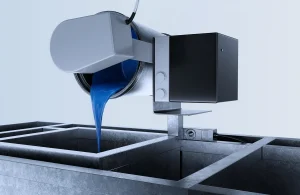
Vacuum casting is a precise casting process for manufacturing near-series plastic parts. It involves pouring liquid polyurethane resin into a flexible silicone mold under vacuum. This produces detailed castings with a high-quality surface finish—ideal for prototypes, pre-series, and small quantities.
FACTUREE offers vacuum casting as an efficient bridging technology between 3D printing and injection molding—with a wide range of material options and short delivery times.
Standard vacuum casting is the most commonly used method for producing near-series plastic prototypes and small series.
Liquid polyurethane resin is poured under vacuum into a silicone mold that has been taken from a precise master model.
The vacuum conditions prevent air pockets, so that even fine details and complex geometries are molded cleanly.
The process is ideal for 5 to 100 components that are intended to simulate injection-molded materials such as ABS, PP, or PC. With vacuum casting, the components remain fast, cost-effective, and true to shape.
In silicone vacuum casting, special liquid silicones are cast instead of polyurethane resins, usually in the same type of silicone mold.
This variant is suitable for elastic, heat- and chemical-resistant components such as seals or ergonomic components.
Here too, the vacuum ensures bubble-free and detailed results.
Silicone vacuum casting is ideal for prototypes with rubber-like properties—for example, as a pre-production replacement for LSR injection molding.
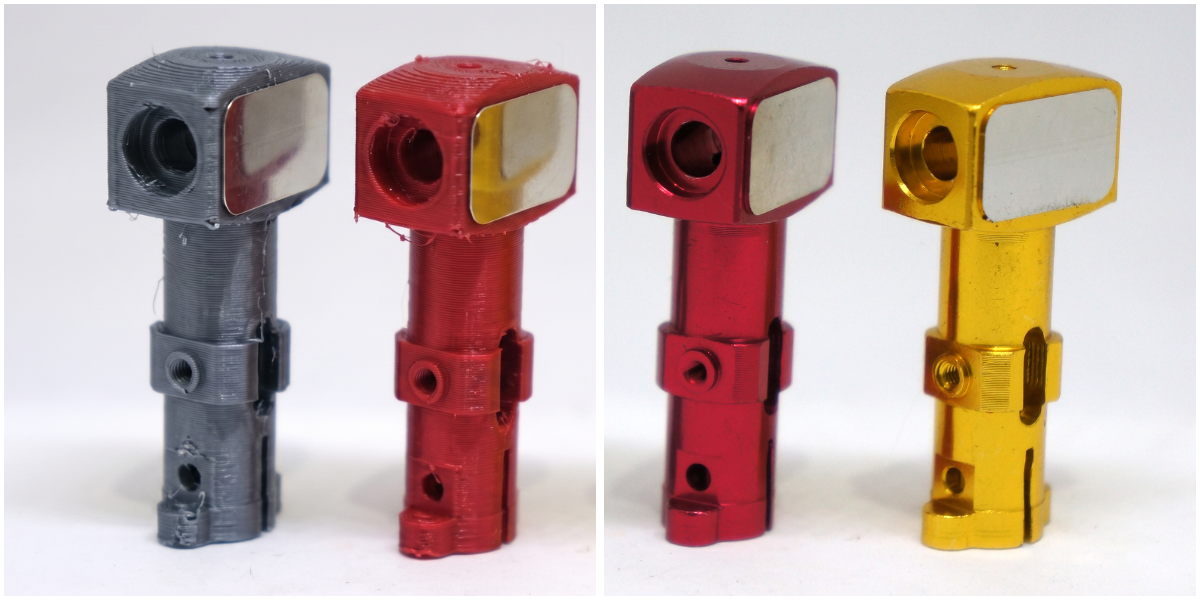
With the insert technique, solid inserts—e.g., threaded bushings, magnets, or metal plates—are manually inserted into the mold before casting.
The liquid casting resin encloses these inserts during vacuum casting and bonds with them either mechanically or by interlocking.
The process enables the direct production of functional multi-component components in a single step.
Insert vacuum casting is particularly suitable for prototypes and small series with mechanical interfaces or integrated component functions.
High-temperature vacuum casting uses specially developed casting resins that can withstand temperatures of up to 150°C or more.
These materials simulate high-performance engineering plastics such as glass fiber reinforced PA or PEEK.
Thanks to vacuum conditions, even complex geometries can be produced without distortion—including fine wall thicknesses.
The process is ideal when prototypes must pass heat tests, e.g., for the engine compartment, electrical engineering, or medical technology.
Materials
High-quality materials for vacuum casting
FACTUREE offers a wide selection of different materials for vacuum casting, including polyurethanes and other castable synthetic resins. We will work with you to find the right material for every application.
Our experienced experts work closely with you to help you choose the optimal material for your requirements. We provide you with sound advice on all options in vacuum casting. Choosing the right material depends on the requirements of the end product. These include strength, flexibility, heat resistance, and chemical resistance.
Thanks to our international manufacturing network, all materials are available quickly and reliably. This enables us to ensure consistent quality, short delivery times, and cost-effective production of your vacuum casting parts.
Frequently requested materials
Polyurethane resins (PU)
Polyurethane in vacuum casting is the perfect solution for the rapid production of robust prototypes and small series with near-series properties. The material impresses with its high dimensional accuracy, good mechanical strength, and excellent surface quality.
This makes standard PU ideal for functional components, design samples, or pre-production series. These are intended to simulate the properties of classic thermoplastics such as ABS or PP.
Thanks to fast curing and minimal tooling requirements, vacuum casting enables short development cycles with high reproducibility.
Whether for housings, technical components, or ready-to-install parts, vacuum-cast polyurethane offers an economical and flexible alternative to injection molding.
Frequently requested:
- ABS-like
- ABS-like, UL94-V0 (flame retardant)
- ABS-like, temperature resistant up to 120°C
- ABS-like, glass-filled
- ABS-like, antistati
Rubber-like polyurethanes
Rubber-like polyurethanes in vacuum casting offer the ideal solution when flexible, shock-absorbing, or sealing properties are required. The materials are characterized by adjustable degrees of hardness (Shore A) and high resilience. They are perfect for elastic prototypes or functional small series.
They are used wherever components need to be malleable, resilient, and durable—e.g., in seals, sleeves, handles, or protective caps.
Unlike genuine elastomers, these PU materials can be processed quickly and precisely. At the same time, they offer a high degree of reproducibility.
Rubber-like PU casting resins can be used to create flexible solutions economically, quickly, and with great attention to detail.
Frequently requested:
- PMMA (Acrylic)-like, transparent
- PMMA (Acrylic)-like
Heat-resistant polyurethanes
Heat-resistant polyurethanes in vacuum casting are ideal for applications where components must withstand permanently elevated temperatures.
These specially formulated casting resins combine excellent dimensional stability with high heat resistance—often up to over 270°C.
Resistant to thermal stress, they are suitable for functional prototypes, e.g., in the automotive, electrical, and household appliance industries.
Despite their heat resistance, these PU materials can be processed easily and precisely—with high detail accuracy and good strength.
Whether covers, housings, or technical components—heat-resistant PU combines high temperature tolerance with economical small-batch production.
Frequently requested:
- POM-like
- PP/PE-like
- PC-like
- PA-like
Silicone for molds
Silicones in vacuum casting offer maximum flexibility, chemical resistance, and temperature tolerance—even for sensitive applications.
They are characterized by outstanding elasticity, aging resistance, and thermal stability. They are also available in variants for the food and medical sectors.
Silicone is ideal for components that need to be soft, durable, and biocompatible. That is why silicone is often used for seals, membranes, masks, and ergonomic components.
Special casting processes can be used to reproduce even complex geometries with great detail.
Whether in medical technology, food processing, or electronics, silicone in vacuum casting stands for functionality and safety at the highest level.
Frequently requested:
- Rubber/TPU/TPE-like
- PA-like
Surface treatments
Surface treatments in vacuum casting
The right surface treatment makes your vacuum casting parts more resistant, durable, and visually appealing. FACTUREE offers various finishing options—ideal for both technical functional parts and visible components. Each surface is specifically tailored to the material and the respective application.
We supply ready-to-install vacuum-cast parts with a flawless finish. We provide the entire process from a single source. This ensures fast, uncomplicated production with consistently high quality.
Frequently requested surface treatments
Mechanical finishes
- Grinding
- Polishing
- Blasting
- trowalizing
- Engraving/Laser engraving
Organic coatings
- Varnishing
- Struckturlake
- effect paints
- Soft-touch paints
- clear coats
- screen printing
- film coating
Contact person
Your vacuum casting experts at FACTUREE
FACTUREE is your contract manufacturer for modern vacuum casting. We combine digital procurement with personal consultation from qualified and experienced contacts.
In addition to precise vacuum-formed parts We can advise you on wall thicknesses, draft angles, venting, and the appropriate vacuum casting process.
Thanks to our extensive network of over 2,000 manufacturers, we can produce your components both in Germany and internationally. A dedicated contact person will support you throughout the process, from initial enquiry to delivery.
FACTUREE stands for efficient processes, clear communication and technical support — the ideal partner for development, design and purchasing. Get to know FACTUREE here.
Billy Schulz
Head of Operations
schulz@facturee.de
Tel: +49(0) 30 629 3939-10
Antonio Scala
Team Lead IT/ES/EN
antonio.scala@facturee.de
Tel: +49(0) 30 629 3939-30
Walid Tlili
Team Lead FR/EN
walid.tlili@facturee.de
Phone: +49(0) 30 629 3939-19
Figures
Facts instead of promises
10k
Successful projects
per year
30k
Customers trust
in FACTUREE
9-12
Working days until
delivery time
37%
Savings on
average
Major projects
From prototype to series production: Scalable manufacturing with vacuum casting
As a modern contract manufacturer from Germany, we offer you an efficient and scalable solution for prototypes, small batches and series production.
We provide support right from the early development phase with precise vacuum casting prototypes – quickly, cost-effectively, and without expensive tooling investments. For tests, pilot applications, or initial product series, we manufacture small batches using rapid tooling or customized master molds – flexibly and economically.
For larger quantities, we use automated vacuum casting processes. This ensures that every part is of the same high quality. If you wish, we also offer fixed contracts—with fixed quantities, consistent prices, and reliable delivery. This helps you plan better—even if your needs change.
Vacuum casting is an extremely efficient solution for manufacturing high-quality prototypes with a look and feel close to that of series production. This process allows samples and components to be reproduced very accurately.
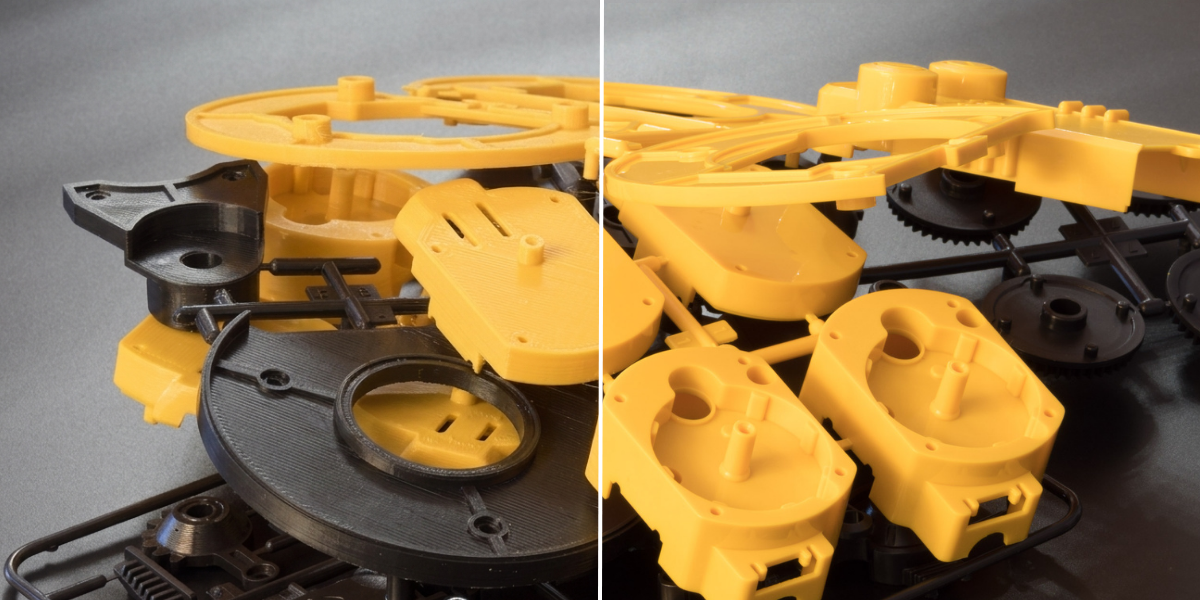
The surfaces are smooth and feature many fine details. There are no visible lines, as is often the case with 3D printing. Surface treatments can be used to customize prototypes. These include grinding, polishing, blasting, and painting.
These methods help improve function and design. Vacuum casting is fast (8 to 15 days) and offers many materials. It is perfect for quick market testing, models, or functional small series.
Vacuum casting really comes into its own in small-batch production: the process is economically attractive for quantities of between 5 and approx. 100–200 parts, as no expensive metal tools are required. The flexible silicone molding technique allows for quick design adjustments and even enables complex geometries with undercuts.
Various surface finishes such as paint, soft-touch coatings, or even decorative electroplating can also be applied to these quantities. However, vacuum casting reaches its technical and economic limits for larger series. For series exceeding 200 pieces, it is therefore advisable to switch to automated injection molding.
With a framework order in vacuum casting, fixed quantities can be planned in advance over a specific period of time.
This reduces production costs and ensures the availability of materials. It also results in short delivery times. And all this with full flexibility of the process. Find out more about FACTUREE's framework agreements here.
Reasons for FACTUREE
Numerous advantages over conventional vacuum casting manufacturing
Fast
- Consistently short delivery times
- Same day offer in most cases
- Simple online inquiry Europe-wide
- Express shipping
Versatile
- Broadest manufacturing range in the market
- Prototyping, small and large series
- 300+ materials available at all times
- From a single source
Reliable
- Unlimited production capacity
- Low complaint rate
- ISO 9001 certified quality management Download
- Personal customer support
REFERENCES
From industry to cutting-edge international research - more than 30,000 satisfied customers
Short delivery time for
Complex production
Despite the complex manufacturing process involving high quantities and tight delivery deadlines, FACTUREE was actually able to deliver the components before the agreed delivery date. The speed at which orders were processed and the personal customer service also impressed us. Costs 15% lower
than with other providers
The quotation from FACTUREE was quick, as was the delivery of the components. The incoming inspection was flawless. The cost of the components was 15% lower compared to other suppliers in Europe. New degrees of freedom through
Stable procurement processes
FACTUREE takes on the task of manufacturing complex components for special applications for us, freeing up valuable resources needed for other activities. Its reliable procurement process allows us to remain operational at all times.
Easy to operate
Procurement interface
We highly regard FACTUREE as a reliable supplier of production parts with good delivery times and an easy-to-use procurement interface. Especially in times of coronavirus, this procurement approach offers the necessary safety.
Wide range of services and
good pricing
FACTUREE provided their quote very quickly, within one to two days. We were impressed by their broad range of services as well as their pricing structures and short delivery times. FACTUREE has met 100% of its delivery dates up to now.
FAQ
Frequently asked questions about vacuum casting
What is vacuum casting?
Vacuum casting is a manufacturing process used to produce prototypes and small series from liquid polyurethane resins. The material is poured into a flexible silicone mold under vacuum.
This results in detailed, bubble-free components with a look and feel close to series production. The process is particularly suitable for quantities between 5 and 100 parts. It bridges the gap between 3D printing and injection molding.
How does vacuum casting work?
First, a master model is produced, usually using 3D printing or CNC milling. This serves as a template for the silicone mold, which is created in several steps and then cured. PU resin is poured into the resulting negative mold under vacuum and then cured in an oven. After demolding, the component is ready for use and can be reworked or coated as required.
Vacuum casting: Advantages of this casting process?
Vacuum casting has numerous advantages. It offers high dimensional accuracy, excellent surface quality, and short production times—at comparatively low tooling costs.
A wide range of materials with different material properties is available.
In addition, the process enables the production of complex geometries with undercuts. It is therefore ideal for functional prototypes and small series.
Vacuum casting: Disadvantages of this casting process?
The biggest limitation is the limited mold life: a silicone mold can typically only produce 15 to 25 parts. The process is also largely manual, which leads to higher unit costs for larger quantities. The cycle times are also significantly longer than with injection molding. Vacuum casting is therefore not economical for true mass production.
What are the properties of vacuum-cast parts?
Vacuum-cast parts are characterized by high detail accuracy, smooth surfaces, and an appearance that closely resembles that of injection-molded parts. Depending on the type, the polyurethane resins used can be elastic, transparent, impact-resistant, or heat-resistant. The components are suitable for assembly, functional testing, or presentation samples—often without further post-processing.
What alternatives are there to vacuum casting?
Alternatives to vacuum casting include 3D printing processes such as SLA, SLS, or MJF. These are ideal for single pieces or very small series. For larger series, classic injection molding is the best option.
In certain cases, urethane milling or RIM (Reaction Injection Molding) may also be an option. However, this depends on material requirements, quantity, and component geometry.
Vacuum casting vs. injection molding: What is the difference?
The most important difference lies in the tools and the production volume. Injection molding requires expensive metal molds, but is economical for large quantities (1,000 or more).
Vacuum casting uses inexpensive silicone molds and is ideal for small series. While injection molding is highly automated, vacuum casting is manual, but more flexible and faster to implement—especially in early product phases.
Vacuum casting vs. 3D printing: What is the difference?
Vacuum casting and 3D printing are two methods used to produce prototypes. The 3D printing builds the component directly layer by layer – ideal for individual items and quick samples. However, the surface often shows lines, and the material properties are not close to those of series production.
Sheet metal is mostly used for Vacuum Casting First, a master model is created. This is used to make a silicone mold, into which liquid plastic is poured under vacuum. This creates high-quality prototypes, that are very similar to genuine series components in terms of appearance and stability. One mold is sufficient for 15–25 parts—ideal for small series.
In which industries is vacuum casting used?
Vacuum casting is used in almost all technology-driven industries. These include the automotive industry, medical technology, consumer goods development, aerospace, electronics, mechanical engineering, and product design. The process is ideal wherever functional prototypes or pre-production series are required quickly.
Does FACTUREE offer ISO certificates?
Yes - FACTUREE works with certified manufacturing partners according to ISO 9001 (quality management). Depending on the industry and application, partners with IATF 16949 (Automotive) or ISO 13485 (medical technology) can be consulted. The selection is made according to the respective requirements of the project. Read more about certifications and test reports at FACTUREE here.
Can test reports or material certificates be supplied subsequently?
Yes - FACTUREE will provide the following documents on request:
- Initial sample test report (EMPB) according to VDA or PPAP
- Material certificate / factory certificate 3.1 (EN 10204)
- Measurement protocols or CT scans for complex geometries
- Protocols for head chefs for finished parts.
This evidence should be provided at the time of the inquiry so that it can be taken into account in the production process.
How can I have vacuum casting parts manufactured by FACTUREE?
Simply upload the CAD file with the technical drawing, select the material and make an online inquiry. FACTUREE connects you digitally with the right manufacturing partner from a network of over 2,000 companies. Production is ISO-certified - fast, precise and reliable.
What are the advantages of online production for cast parts?
Online production has become indispensable these days. For cast parts, online production offers numerous advantages:
- Fast production of customized castings: often with delivery in 9-12 working days.
- High precision for complex geometries
- Cost efficiency for prototypes and series: No tooling costs for casting; low unit prices thanks to smart paver selection.
- Variety of materials for every requirement - everything can be ordered digitally.
- Flexibility with quantities and variants: Individual parts, variant production or mass production - without long lead times.
- Perfect for recurring components: Framework agreements and price stability for series parts or maintenance components
- Seamless integration into digital development processes: Simple upload of DXF, STEP or STP files, automatic checking and quotation generation
- Quality control and ISO certification: Manufacturing partner with proven quality and reliable delivery
How can I contact FACTUREE?
FACTUREE is your local injection molding company, based in Berlin. Our experienced team is available by phone Monday through Friday—personal, competent, and close by. Here are our contact details:
Oudenarder Street 16
13347 Berlin (Osram-Höfe)
Germany
info@facturee.de
+49 30 629 3939-0
resources
Whitepaper media library
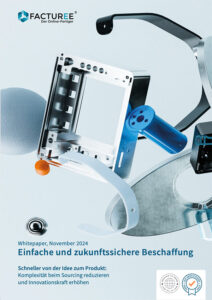
Simple and future-proof procurement
FACTUREE has analyzed the biggest challenges and needs in procurement in a comprehensive market research study. This white paper provides exclusive study results and shows how companies can reduce complexity in sourcing, optimize processes and future-proof their procurement.
November 2024
Series production companies find themselves in an unprecedented situation in terms of procurement. as far as procurement is concerned. Uncertainties and crises create difficult conditions and often make even short-term planning impossible. At the same time, it is important to to realign themselves in the course of digitalization and react to constantly changing competitive situations.
16 pages
Online Manufacturing – Procurement advantages in series
February 2023
Further services
All manufacturing processes from a single source
News and dates