Material procurement for CNC: Tips for your CNC material
 by Facturee editorial team
Material procurement for CNC is one of the most important decisions in the manufacturing process of a milled or turned component. The CNC material selected determines the functionality and performance. It also defines how efficiently, economically and reliably a component can be manufactured.
A well-planned part in the CAD model can be expensive or impossible to manufacture in practice. This happens if the selected CNC material does not match the machining parameters, tolerances or machining requirements. This guide is intended to support you in the structured selection and procurement of materials for CNC projects
Introduction
This guide to material procurement for CNC provides engineers and purchasers with a valuable orientation aid. The aim is to enable them to select the right CNC materials with ease. It explains the most important material groups and highlights their specific properties.
It also analyzes their impact on costs and manufacturability. This creates a solid basis for optimizing the CNC part, from the initial design to series production.
To make the best decision for CNC materials in your project, the experts at FACTUREE will help you. Together, we examine the decisive criteria to ensure that your component is perfectly designed right from the start.
The most important CNC materials in detail

The common CNC materials can be divided into five main categories: Aluminum alloys, steels, stainless steels, soft metals and plastics. In addition, CNC composite materials and ceramics are also gaining in importance. Each of these groups brings with it a unique set of characteristics and challenges.
CNC steel and metalworking
Metals are the most commonly used materials in CNC machining. Due to their strength, hardness and versatility, they are the most popular material in mechanical engineering and aviation.
Aluminum alloys
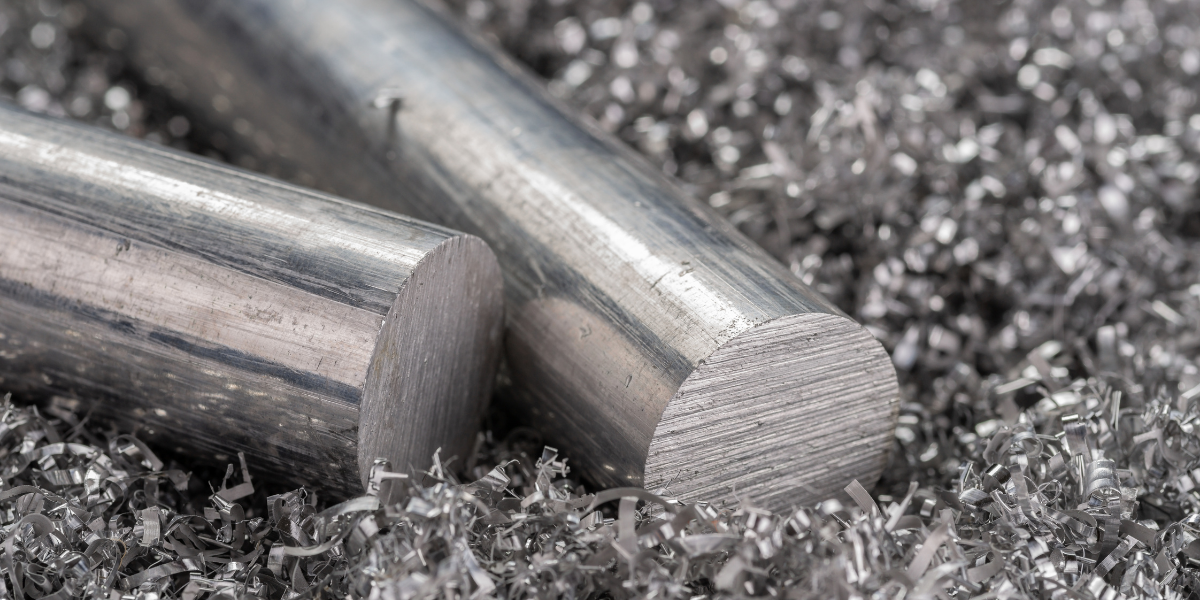
Aluminum is probably the most frequently machined CNC metal. It is characterized by a high strength-to-weight ratio, excellent corrosion resistance and outstanding machinability.
- Aluminum 6061 (Al-Mg1SiCu) is a versatile material. It has medium strength, is easy to weld and does not rust quickly. This is why it is often used for components in engineering, vehicle construction and bicycles. The tensile strength is up to 290 MPa and the density is 2.70 g/cm³. It is a favorable choice if extremely high strength is not required.
- Aluminum 7075 (Al-Zn6MgCu) is much stronger and more resistant than 6061. It is light (2.81 g/cm³) and has a very high tensile strength of up to 572 MPa. It is therefore often used in the aerospace industry - for example for aircraft parts. Machining is more difficult than with 6061, but its hardness means that hardly any burrs or rough edges are produced.
Steel
Steel is an all-rounder in CNC machining. It offers excellent tensile strength, hardness and durability and is also very cost-effective. They are used in areas where the focus is on high mechanical loads.
- Carbon steels (e.g. C45 AISI 1045): As a "soft" steel grade, C45 is considered to be very cost-effective, easy to machine and easy to weld. It is often used in the automotive and construction industries for car bodies, frames and other components. The typical cutting speed is 70-90 m/min.
- Tool steels (e.g. 1.2842): These alloys are specially designed for their extreme hardness and wear resistance. They are the best choice for the manufacture of tools, machine parts and plastic molds. These must have high mechanical strength. The machining of tool steels is demanding due to their hardness and alloying element content. It requires special carbide tools and controlled cooling to prevent overheating.
Stainless steel
Stainless steel is indispensable in CNC machining. They are characterized by their inherent corrosion resistance, which is achieved by a chromium content of at least 10 %.
This makes it an important class of material. It is used in food, chemical and medical technology. It is also used in shipping.
The machining of austenitic stainless steels (e.g. 304, 316) is challenging due to their tendency to work harden. This is because the surface is hardened during machining and tool wear is drastically increased. The recommended cutting speeds are only 40-60 m/min, which leads to longer machining times.
- Stainless steel 303 (1.4305) is very easy to machine. This means that it can be easily CNC milled or turned. It is therefore well suited to the production of large quantities. However, it rusts somewhat faster than other stainless steels.
- Stainless steel 304 (1.4301) is the most commonly used stainless steel. It hardly rusts, is stable and is easy to weld. It is often found in kitchens, for pipes or sinks.
- Stainless steel 316L (1.4404) is even more resistant to rust - especially when exposed to salt water or chemicals. This is why it is often used in shipbuilding or medical technology. However, it is more expensive and more difficult to machine than 304.
Non-ferrous metals: brass & copper
Non-ferrous metals such as brass and copper are good for CNC machining. They have good machinability and special properties.
- Brass: Brass (e.g. MS58) is a very soft material with excellent machinability. It is therefore ideal for the production of complex CNC parts. This material is easy to form at normal temperatures and can be soft soldered and hard soldered. It is therefore often used in automotive and shipbuilding as well as for fittings and connectors.
- Copper: Copper (e.g. C101) is characterized by its excellent thermal and electrical conductivity. This property makes it an indispensable material for electronic components and heat sinks in electrical engineering. With a typical cutting speed of 150-200 m/min, it is very easy to machine. Nevertheless, its ductility can promote the formation of built-up edges.
Titanium
Titanium (e.g. grade 5 / Ti-6Al-4V): This light metal is characterized by an exceptional strength-to-weight ratio. Its excellent corrosion resistance and biocompatibility make it a key material for demanding applications. It is often used in aerospace, medical technology and high-performance automotive engineering.
However, machining titanium places high demands on the manufacturing process. Due to the extremely low thermal conductivity of the material, the heat generated is concentrated at the cutting edge of the tool.
This leads to extremely rapid wear. To compensate for this, very low cutting speeds of 20 to 30 m/min are required. Special heat-resistant tools and high-pressure coolants are also required. These factors make titanium one of the most expensive materials in CNC machining.
Plastics: lightweight, versatile and cost-efficient
Plastics have become an established alternative to metals in CNC machining. Their advantages lie in their low weight, their electrical insulation properties, their corrosion resistance and their often excellent machinability.
- ABS: This widely used thermoplastic offers good strength, heat resistance and machinability. ABS is often used for prototypes before injection molding.
- POM (Delrin): This plastic is known for its excellent machinability. POM is very rigid and dimensionally stable. It has low friction and water absorption. It is therefore ideal for precision parts such as gears and bearings.
- Polycarbonate (PC): An extremely durable thermoplastic that is characterized by a higher impact strength than ABS. Due to its transparency and shatter resistance, it is often used as a substitute for glass.
- PEEK: This high-performance plastic (polyether ether ketone) offers amazing thermal stability and chemical resistance. With its excellent mechanical properties, PEEK can replace metal materials in some applications.
A decisive advantage in medical technology is its biocompatibility and ability to withstand several sterilization cycles. However, machining requires special precautions to avoid internal stresses and cracks. For medical devices, dry processing is often necessary in order not to impair biocompatibility
CNC composites
CNC composite materials such as CFRP and GFRP are known for their good strength-to-weight ratio. They also have high rigidity. They are widely used in the aerospace, automotive and sports equipment industries.
However, machining these materials poses a particular challenge. The conductive fine dust produced can not only be harmful to health, but can also damage sensitive electronics. This is why special, enclosed CNC machines are important. They need good extraction concepts and strict guidelines (TRGS 900).
Comparison of typical CNC materials
The following table serves as a strategic guide to facilitate the initial material selection for CNC machining.
| Material group | Machinability | Relative costs (€/kg) | Main advantage | The challenge |
|---|---|---|---|---|
| Metals | ||||
| Aluminum alloys | Excellent | Low | High strength-to-weight ratio | Heat expansion, burr formation |
| Steels | Good to Moderate | Very low | High strength, cost-effective | Rust (carbon steel) |
| Stainless steels | Moderate | Medium | High corrosion resistance | Chip removal, curing |
| Soft metals | Excellent | Medium | Conductivity, aesthetics | Lower strength |
| Titanium | Moderate to low | High | High strength, biocompatibility | Tool wear, heat dissipation |
| Plastics | ||||
| Standard thermoplastics | Excellent | Very low | Cost efficiency, lightness | Lower strength, dimensional stability |
| High-performance plastics | Good | High | Extremely high performance | Costs, special process parameters |
| Composite materials | ||||
| CFRP/GRP | Moderate | High | Extreme stiffness, lightness | Dangerous fine dust, abrasive |
Possible surface finishes and finishing methods*
| Material group | Post-processing method | Main advantage |
|---|---|---|
| Aluminum alloys | ||
| Anodizing | Corrosion protection, aesthetics | |
| Polishing | Aesthetics, reflective surface | |
| Powder coating | Robustness, aesthetics | |
| Steel / stainless steel | ||
| Passivating | High corrosion resistance | |
| Black oxide coating | Aesthetics, light corrosion protection | |
| Polishing | Aesthetics, function (warehouse) | |
| Powder coating | Robustness, aesthetics | |
| Plastics | ||
| Polishing | Aesthetics, transparency (e.g. acrylic) | |
| General | ||
| Glass bead blasting, sand blasting | Cosmetic surface, diffuse texture | |
*This is just a selection of possible surface and finishing methods offered by FACTUREE. Here you will find all surface treatments of the online paver.
A checklist for material procurement for CNC
Are you unsure which CNC material is the right one for your component?
Use our simple guide to clarify the decisive factors and make the best choice.
What is the main requirement for your component?
[High strength / hardness / wear resistance]
[Low weight (lightweight construction)
[Maximum corrosion / chemical resistance]
[Specific electrical / thermal properties]
[Lowest possible total costs (material + processing)]
In which environment is the component used?
[Indoor, dry, normal temperature]
[Outdoor area, weather / humidity]
[Contact with salt water / aggressive chemicals]
[High or very low temperatures]
What other factors are decisive?
[Fast & cost-effective machining (high machinability)
[Complex geometry with thin walls or deep pockets]
[Particularly high surface quality / decorative look]
[A balanced ratio of all properties]
Your answers help us to select the best materials. This enables us to advise you on the best solution for you.
Practical examples of CNC material from industries
To illustrate the strategic selection of materials, the following case studies from practice are presented.
Case study 1: Aerospace
The aerospace industry places the highest demands on material performance. Here, low weight, extreme strength, fatigue resistance and reliability under extreme conditions (temperature, pressure) are of the utmost importance. Aluminum alloys, especially the high-performance grade:
- 7075, are the primary material for airframes, wings and fuselage bulkheads due to their high strength-to-weight ratio.
- Titanium is used for critical engine components and landing gear.
- High-performance plastics such as PEEK are increasingly being used as a metal substitute for lighter, heat-resistant parts.
Case study 2: Automotive industry
In the automotive industry, material selection is a direct conflict of objectives between cost, functionality and production volume.
- For car bodies and many structural parts, it is often cheaper to use Carbon steel used. It offers a good balance of toughness, strength and cost-effectiveness in mass production.
- Aluminium alloys are used in weight-sensitive areas such as engine and chassis components.
- Brass is often used in car and shipbuilding because it is easy to work with and lasts a long time. It is also very easy to recycle without losing any of its quality.
Case study 3: Medical technology
Medical technology requires various materials that meet the highest standards of precision, durability, biocompatibility and sterilizability. For this reason, in addition to metals such as Titanium also High-performance plastics used.
The high-performance plastic PEEK has established itself as a successful replacement for titanium in the manufacture of implants such as spinal fusion devices. A decisive advantage is the biocompatibility of the material.
This enables limited contact with skin and tissue. And it allows it to be used in dental implants and prostheses. In addition, medical-grade PEEK can withstand multiple sterilization cycles without any loss of quality, which is of key importance for medical instruments.
Have you found the right material for CNC machining?
The next step is just a click away. Upload your CAD file now, choose from over 30 metals and plastics and receive a free quote for your CNC part.