Whether automotive, IT or medical technology - the quality of your sheet metal work determines the success of your product. We have analyzed the typical applications and specific requirements for modern sheet metal processing. Find out what is important for sheet metal work in your industry.
Table of contents

Introduction
What do a state-of-the-art control cabinet in mechanical engineering, a precision-manufactured front panel in medical technology and the robust housing of an electric car charging station have in common? They would all be unthinkable without professional sheet metal work. These components form the structural foundation of thousands of applications and are crucial for their function and longevity.
Precisely for this reason the decision for the right manufacturing partner so criticalIt directly influences the time-to-market in prototyping, the cost efficiency in series production and the final quality of the entire product. To help you make this decision with confidence, in this article we shed light on the diverse applications of sheet metal work in key industries and highlight the decisive factors for successful implementation.
Excursus: Sheet metal work in an industrial context
When we talk about sheet metal work in a professional environment, we are not referring to manual tapping in a workshop. In industrial and modern manufacturing Sheet metal work for a high-precision, technology-based process for forming and processing sheet metal. The aim is to turn a flat raw material into a flat product using a chain of computer-controlled (CNC) processes. three-dimensional component that corresponds exactly to the digital specifications of a CAD drawing.
The goal is maximum precision, repeatability and efficiency - from individual prototypes to series production with thousands of parts. As a specialized online manufacturer, we rely on the following core processes to realize your demanding projects:
Laser cutting
We use concentrated light energy to cut high-precision and virtually burr-free contours, complex geometries and fine cut-outs in sheet metal of various materials and thicknesses. This process guarantees maximum design freedom and fast results. Find out more here.
Plasma cutting
Plasma cutting uses an ionized gas jet (plasma) at a high temperature to melt and cut electrically conductive metals. This process is characterized by its high cutting speed and is particularly economical when processing medium to large sheet thicknesses, especially steel and stainless steel.
Waterjet cutting
In waterjet cutting, we cut material with extremely high water pressure, to which an abrasive is often added. As this is a cold cutting process, no thermal stresses or structural changes occur in the material. It is ideal for thick workpieces, heat-sensitive alloys and a variety of other materials.
Bending
After cutting to size, we give the component its three-dimensional shape. Our CNC-controlled press brakes bend the flat sheet metal precisely at a defined angle and in the intended position to create housings, angles or complex profiles.
Punching/nibbling
For certain geometries, such as standard hole patterns or ventilation gills, punching is a highly efficient method. Larger recesses can also be produced quickly and economically using the nibbling process.
Welding
To join individual sheet metal parts into complex and stable assemblies, we use proven welding processes such as TIG and MAG. This creates tight, strong and durable connections for housings, frames and chassis.
Typical applications of sheet metal work in central industries
The true strength of industrial sheet metal processing lies in its enormous versatility. Depending on the industry, the requirements for the component, the choice of materials and the manufacturing processes change fundamentally. In the following, we highlight the typical applications in four key industries and show how precise sheet metal parts become a decisive factor for project success.

Sheet metal work in the electronics & IT industry: dimensional accuracy and function
Where electrical components need to be protected, organized and cooled, sheet metal parts are indispensable. Functionality and exact dimensions are the key here.
Typical applications:
- 19-inch housing for server racks
- Shielding plates for EMC protection
- Front panels and holders for circuit boards
- Heat sink for heat dissipation
Special requirements:
- Extremely high dimensional accuracy
- Complex cut-outs for connections and fans
- Electrical conductivity or insulation
- Efficient heat dissipation
Materials & processes: The material of choice here is often lightweight Aluminum alloys (raw or anodized) or thin, Galvanized sheet steel. Technologically decisive is the Precise laser cuttingoften supplemented by the Pressing in fastening elementsto simplify assembly.
Sheet metal work in vehicle construction & automotive: light, stable and safe
In the automotive industry, especially in e-mobility, every gram is crucial. Sheet metal processing enables the production of lightweight yet highly stable components.
Typical applications:
- Prototype parts for development
- Brackets for sensors and control units
- Protective battery trays and chassis parts
- Structural elements for the interior
Special requirements:
- Maximum weight reduction with high stability
- Compliance with very tight tolerances
- Fulfillment of industry certifications
- High crash safety
Materials & processes: To fulfill this profile High-strength steels and aluminum alloys used. Production is often characterized by Complex edge sequences and the creation of complete Welded assemblies marked.

Sheet metal work in architecture & construction: Aesthetics and durability
In modern construction, sheet metal parts combine function with design. They characterize the appearance of buildings and must be extremely durable at the same time.
Typical applications:
- Durable façade elements and wall cladding
- Elegant blinds and slats as sun shading
- Custom-made angles and profiles for roofs and walls
Special requirements:
- Absolute weather resistance
- Durable corrosion protection
- Flawless aesthetics of the surfaces
- Freedom of color design
Materials & processes: The range of materials extends from brushed stainless steel and Corten steel up to Powder-coated or painted aluminum. This enables a wide variety of designs with maximum protection against environmental influences.
Sheet metal work in mechanical and plant engineering: robustness and precision
In mechanical and plant engineering, sheet metal parts form the stable backbone of countless constructions. They have to withstand harsh production environments and guarantee maximum precision for a perfect fit.
Typical applications:
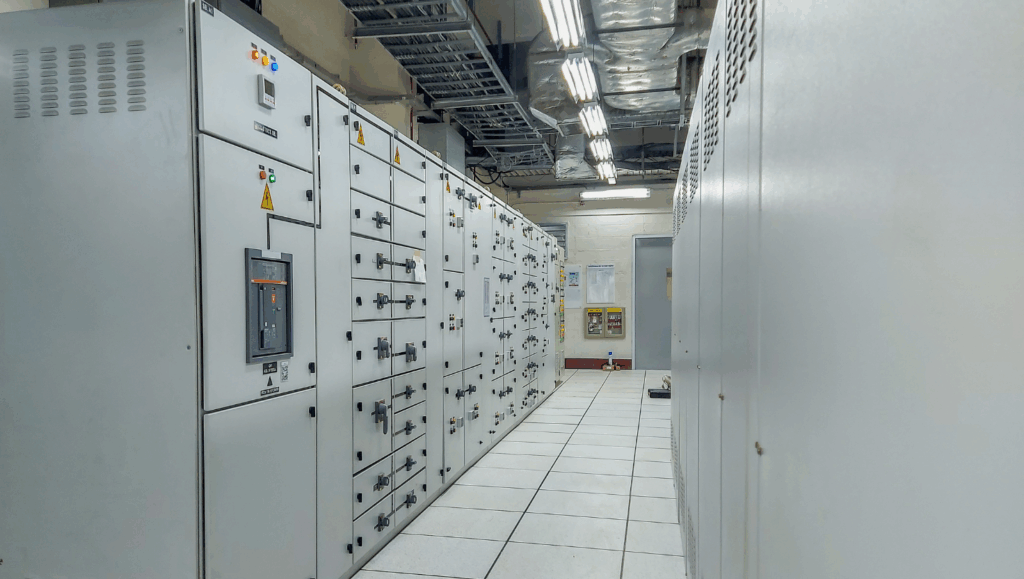
- Enclosures for control systems & control cabinets
- Custom-fit protective cladding for machines
- Heavy-duty mounting plates and brackets
Special requirements:
- Maximum robustness and durability
- High precision for assembly
- Efficiency with high quantities
- Compliance with protection classes (e.g. IP protection)
Materials & processes: The requirements are ideally met by powder-coated steel or corrosion-resistant Stainless steel fulfilled. As standard, production is based on a combination of precise Laser cutting and exact CNC edges.
Sheet metal work in the aerospace industry: lightweight construction and maximum reliability
In the aerospace industry, every gram counts and compromises in terms of safety are out of the question. Sheet metal processing supplies essential components that have to withstand extreme loads and at the same time have minimal weight.
Typical applications:
- Structural components and frames for the hull
- Lightweight brackets for hydraulic and electrical systems
- Housing for avionics and control electronics
- Components for engine cowlings (Nacelles)
Special requirements:
- Extremely lightweight construction with maximum strength
- Resistance to high temperatures and corrosion
- Seamless material traceability
- Compliance with the strictest aviation standards and certifications (e.g. EN 9100)
Materials & processes: In order to meet these extreme requirements, high-performance materials such as Titanium and special aluminum alloys for use. Production requires maximum precision through processes such as 5-axis laser cutting or Waterjet cuttingto minimize thermal influences. Complex forming processes and certified welding procedures are also standard here.
Sheet metal work in medical technology: hygiene and absolute precision
In medical technology, the focus is on human health and the reliability of diagnostic devices. Sheet metal parts must meet the highest standards of hygiene, cleanability and biocompatibility.
Typical applications:
- Housing for laboratory and analysis devices (e.g. DNA sequencers)
- Covers and chassis for imaging systems (MRI, CT)
- Sterilizable instrument trays and shelves
- Precision components for surgical instruments
Special requirements:
- Highest surface quality, no pores or gaps
- Easy to clean and highly resistant to disinfectants
- Biocompatibility of the materials used
- Compliance with regulatory standards (e.g. ISO 13485)
Materials & processes: The material of choice is almost exclusively High-quality, stainless steel (e.g. 1.4301, 1.4404) or Titanium. In the processes, the focus is on burr-free cuts through Fine laser cutting and non-porous connections through TIG welding. A subsequent surface treatment such as electropolishing is often required to ensure maximum purity.
The decisive advantage: online production of sheet metal work
The diversity of industries and applications shows that professional sheet metal work is highly individual. But how do you get from the digital 3D model to the finished component without getting lost in lengthy inquiry processes? This is exactly where online manufacturing revolutionizes the procurement process for engineers, purchasers and product developers. Instead of waiting for manual quotations, you can use a digital platform that offers you decisive advantages:
- Speed: The greatest lever for innovation is time. With our system Simply upload your CAD file and receive a binding offer immediately. This automated process shortens development and procurement cycles from days to just a few minutes.
- Efficiency: Forget e-mail ping-pong and unclear queries. Our platform is Ideal for rapid prototyping and equally scalable for agile series production. You retain full control and can concentrate on the essentials: Your project.
- Transparency: Full cost control right from the start. You receive a Clear, detailed cost overview even before you place the order. This enables precise budget planning without unexpected surprises.
- Precision: Our consistently automated processes ensure that your components are manufactured with maximum repeat accuracy and to exact specifications - from the first sample to the thousandth series part.

Conclusion: Your partner for precise sheet metal parts
As we have seen, professional sheet metal work is the foundation for innovation and quality in almost every key industry - from robust machine cladding to intricate electronic housings. The requirements for materials, precision and functionality are as diverse as the end products themselves.
Modern online production offers you the opportunity to master this diversity quickly, efficiently and transparently. It not only shortens your time-to-market, but also gives you the security of receiving precise, high-quality components.
Do you have a specific project? Take the next step. Upload your CAD data now and receive a free quote in just a few seconds.