
Inconel: Everything about the nickel-based alloy
 by Facturee editorial team
In the world of high-performance materials, there is one group of materials that always comes into play when conventional steels and even titanium reach their limits: Inconel. This nickel-based alloy is the „extreme athlete“ among metals. But what makes it so special and why is it such a challenge to machine?
What exactly is Inconel?
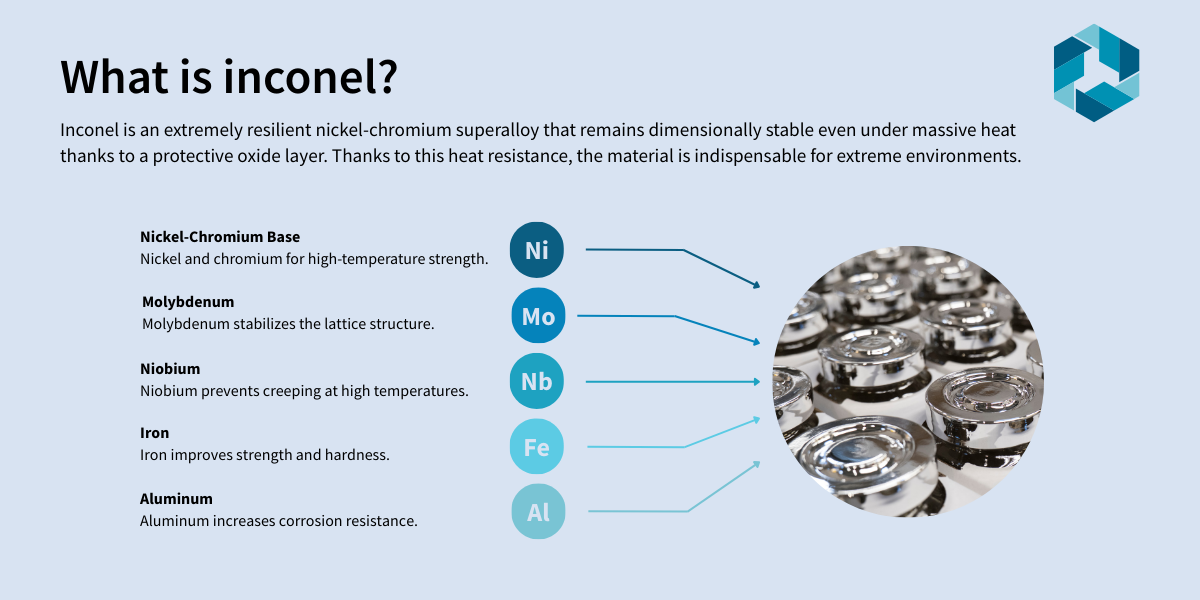
Inconel is a brand name of the Special Metals Corporation, but has established itself in the industry as a generic term for a range of nickel-chromium-based superalloys. The chemical composition is designed to stabilize components under the most extreme conditions.
The trick lies in the lattice structure: thanks to additives such as molybdenum, niobium, iron or aluminum, the material remains structurally stable even at temperatures close to its melting point. While ordinary stainless steel becomes „soft“ (creep) at extreme heat, this alloy retains its strength.
Why is Inconel indispensable?
Two properties make Inconel a favorite for engineers in aviation, energy and marine technology:
- Extreme heat resistance: At high temperatures, it forms a dense, stable passivation layer of oxides. This layer protects the underlying material from further oxidation - a self-protection mechanism that works up to well over 700°C.
- Outstanding corrosion resistance: Whether aggressive acids, chloride-containing seawater or sulphurous exhaust gases - this nickel-based alloy is largely immune to pitting and stress corrosion cracking.
What are the challenges with Inconel?
As impressive as the properties of Inconel are in use, its processing is just as demanding. It is considered difficult to machine. There are three main reasons for this:
- Work hardening: The surface of the material becomes extremely hard during the cutting process. This leads to massive wear on the cutting edges of the tools.
- Low thermal conductivity: When milling or turning, the heat remains in the cutting zone and is not dissipated via the chips. The thermal trauma for the tool is enormous.
- Toughness: The nickel-based alloy literally „sticks“ to the tool, which makes chip formation more difficult.
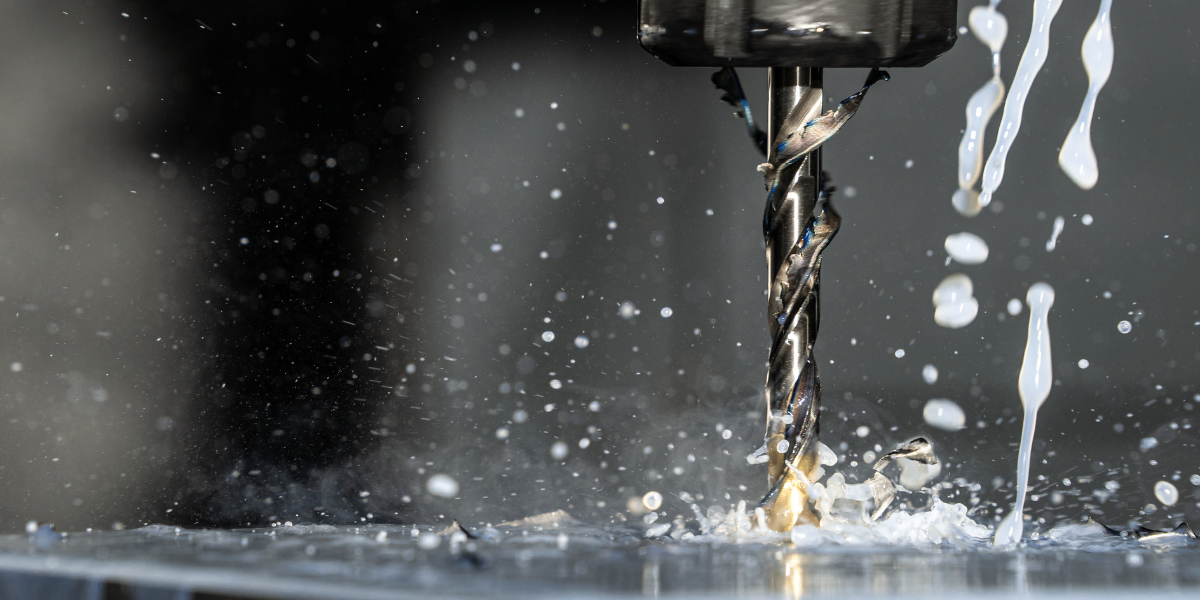
Modern solutions: In order to manufacture Inconel economically, specialized carbide tools with high-performance coatings, low cutting speeds and extensive use of cooling lubricants are used today.
In addition, the Additive manufacturing (3D printing) has proven to be a game changer: Components with complex internal cooling channels, which would be almost impossible to produce conventionally, can be precisely realized with Inconel powder using the LPBF (Laser Powder Bed Fusion) process.
Where is the nickel-based alloy used?
The list of applications reads like a catalog of extreme conditions:
- Aerospace: Housing for jet engines and turbine wheels.
- Motorsport: Manifolds and exhaust components in Formula 1 (every gram counts here at maximum heat).
- Oil and gas industry: Borehole components that have to withstand extreme pressure and salinity in the deep sea.
Energy technology: High-temperature heat exchangers in nuclear power plants or solar thermal power plants.
Which Inconel variants are available?
| Variant (Alloy) | German material number | Main feature | Typical application |
| Inconel 718 (Alloy 718) | 2.4668 | Extreme strength & creep resistance up to 700°C. | Aerospace: Engine parts, turbine blades, rocket engines. |
| Inconel 625 (Alloy 625) | 2.4856 | Excellent corrosion resistance (especially salt water). | Offshore & Chemicals: Seawater pipes, acid tanks, exhaust systems. |
| Inconel 600 (Alloy 600) | 2.4816 | Resistant to oxidation and stress corrosion cracking. | Nuclear power & furnace construction: Steam generators, furnace linings, heat exchangers. |
| Inconel 601 (Alloy 601) | 2.4811 | High resistance to high-temperature oxidation. | Industrial ovens: Thermocouple protection tubes, annealing pots, glass production. |
| Inconel 825 (Alloy 825) | 2.4858 | Specialist for sulphuric and phosphoric acid. | Oil & Gas: Pipelines for sour natural gas, chemical process technology. |
| Inconel X-750 (Alloy X-750) | 2.4669 | Retains resilience and elasticity at high temperatures. | Mechanical engineering: High-temperature springs, seals, bolts in gas turbines. |
Conclusion: Quality has its price
Inconel is neither a cheap raw material nor easy to machine. However, in projects where component failure would have catastrophic consequences or where maintenance costs would explode due to corrosion, this nickel-based alloy is the most economical choice.
When planning components, it is crucial to rely on manufacturing partners who have experience with the specific cutting data and thermal loads of this material.